Post 25 - Critical Refections

Too Much and Never Enough

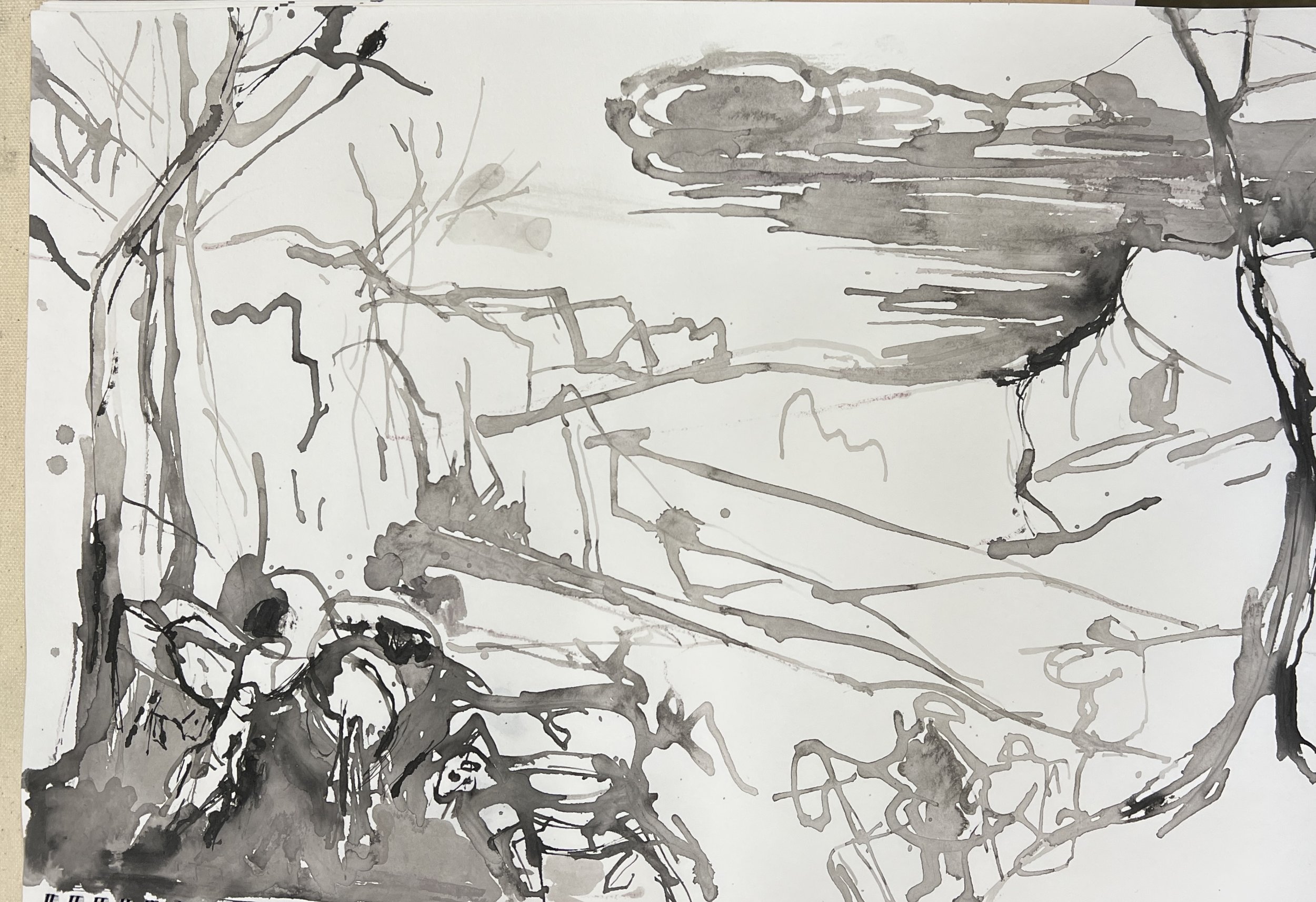
I wish to trust the eye as a discerning element. Stand back from judgement as I draw and paint. It is purely abstract and sensory. I allow emotions to pass through, the thought process is secondary and indeed thoughts are only our creation - they can be listened to then put to one side.

In the Studio

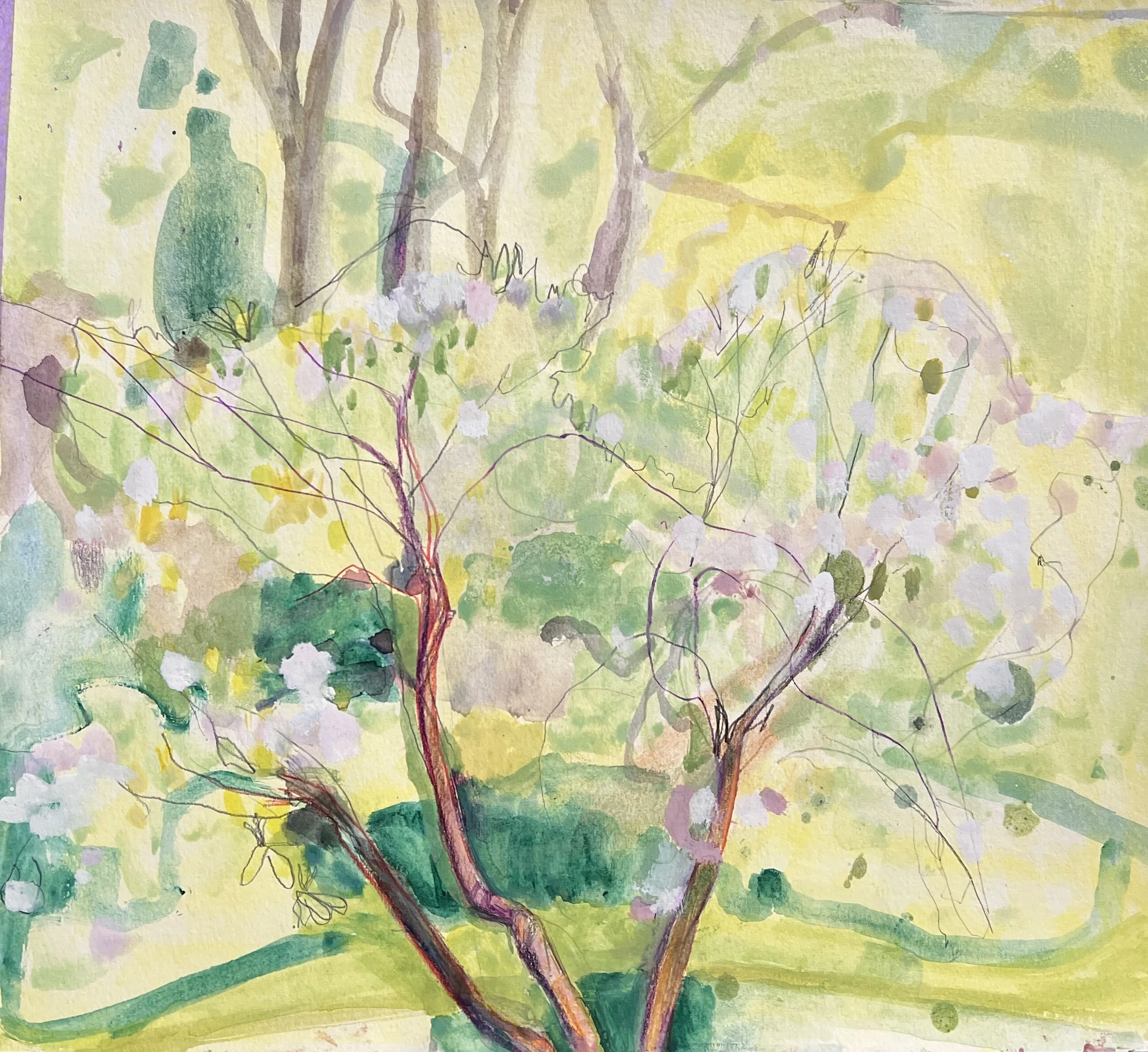
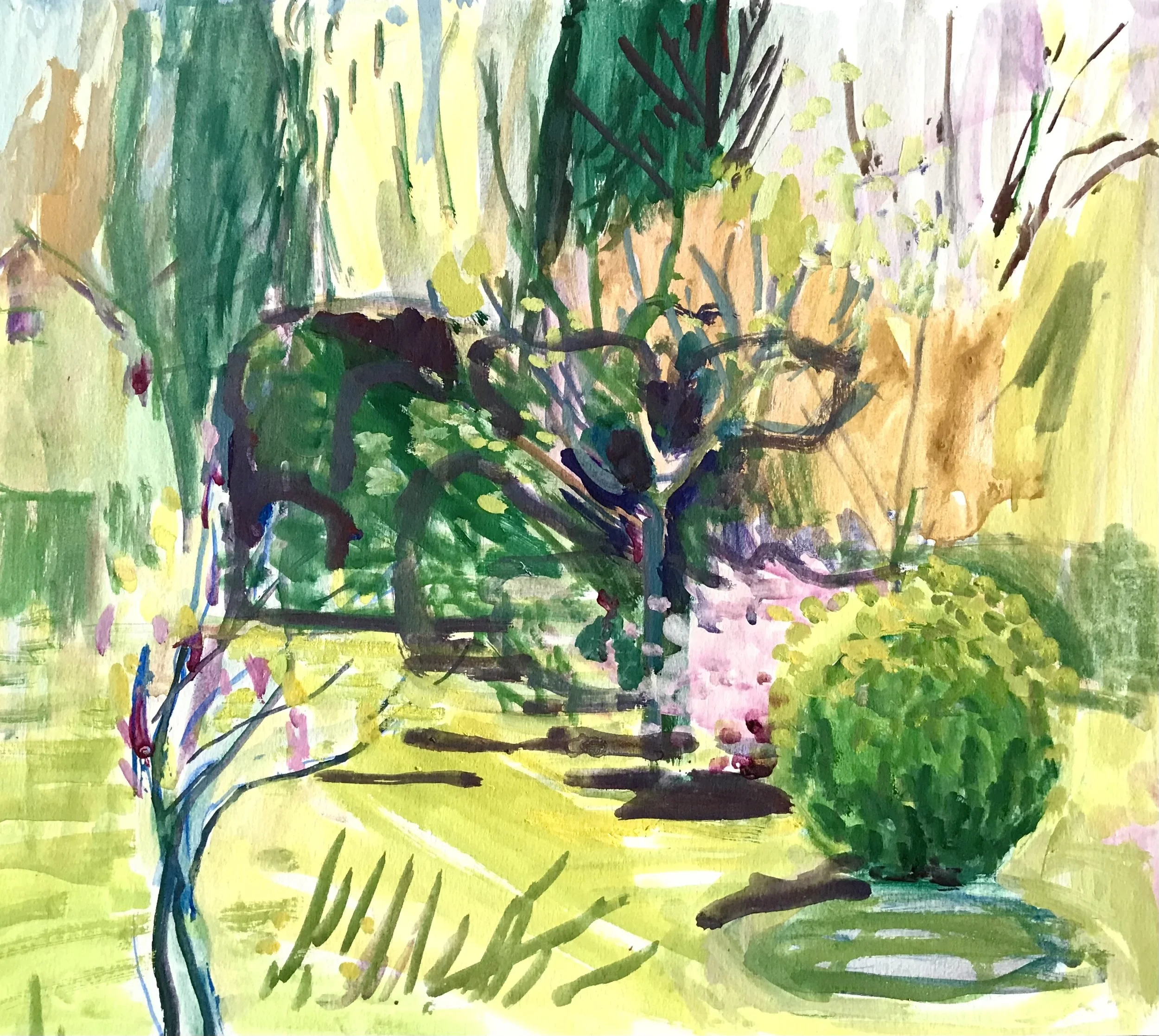
I have been working on a painting based on a watercolour sketch of a formal garden, it has been interesting to struggle with the form becoming more solid and formal because of scale and a change in medium (sketch was in gouache now oils). I keep seeing a reoccurrence of a mirror shape in my paintings and wonder if I should be using this device more obviously as in Cecily Browns Vanity paintings.

I like to follow through a passing down of an idea or tradition in painting, specifically how an image can be modified and re discovered as it were.

e.g. Edgar Degas (1834-1917) his Salon Painting ‘War scenes from the Middle ages’1861 Paris Musee d’Orsay - then in 1868 his painting ‘Duet of Women in Interior’- deeply influenced Francis Bacon. David Sylvester interviews Bacon and discusses this in the 1987 documentary “Francis Bacon and The Brutality of Fact”. expand

Degas medieval war scene

Edgar Degas (1834-1917)

Medieval War scene

oil on canvas

1865

Edgar Degas

The Song Rehearsal, 1873

Francis Bacon

Portrait of George Dyer and Lucian Freud

1967

198 x 147.5 cm

see also Cecily Browns reinterpretation of Death and the Maid. expand

Beyond Impressionism is not copying nature but insisting that the artist is free to choose what is significant in nature for them and transform it into something entirely personal by means of perhaps

“A synthesis of form and colour derived from the observation of the dominant element only” Bonnard Pierre Bonnard The Late Still Lives and Interiors The Metropolitan Museum of Art

I am basing my essay on the essay written in This book.

Christov-Barakgriev , Carolyn. “A Color that is a Form of Thinking” Colori Emotions of Color in Art GAM Torino March 14-July 23, 2017, 19-22 

Post 21 - Final Week before Seminar

Trying to collect thoughts into more coherent Artists Statement

Using ‘The Waves’ introduction by Jeanette Winterson

“Sun and Moon are usually paired together, but sun and shadow are the light-changes that affect our lives”What do we need to know? ’About sun. About shadow”

Also starting new work based on Colour

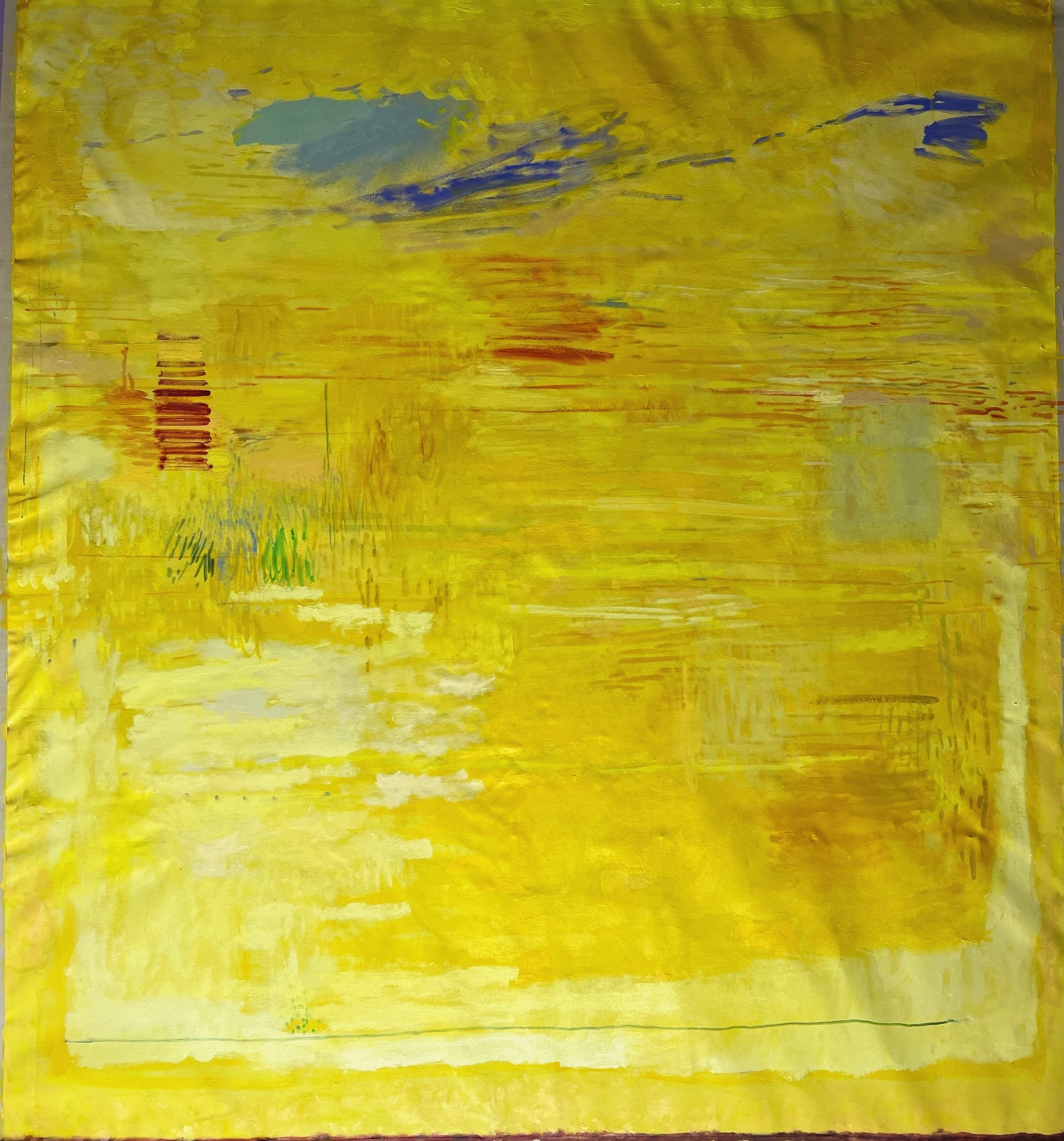
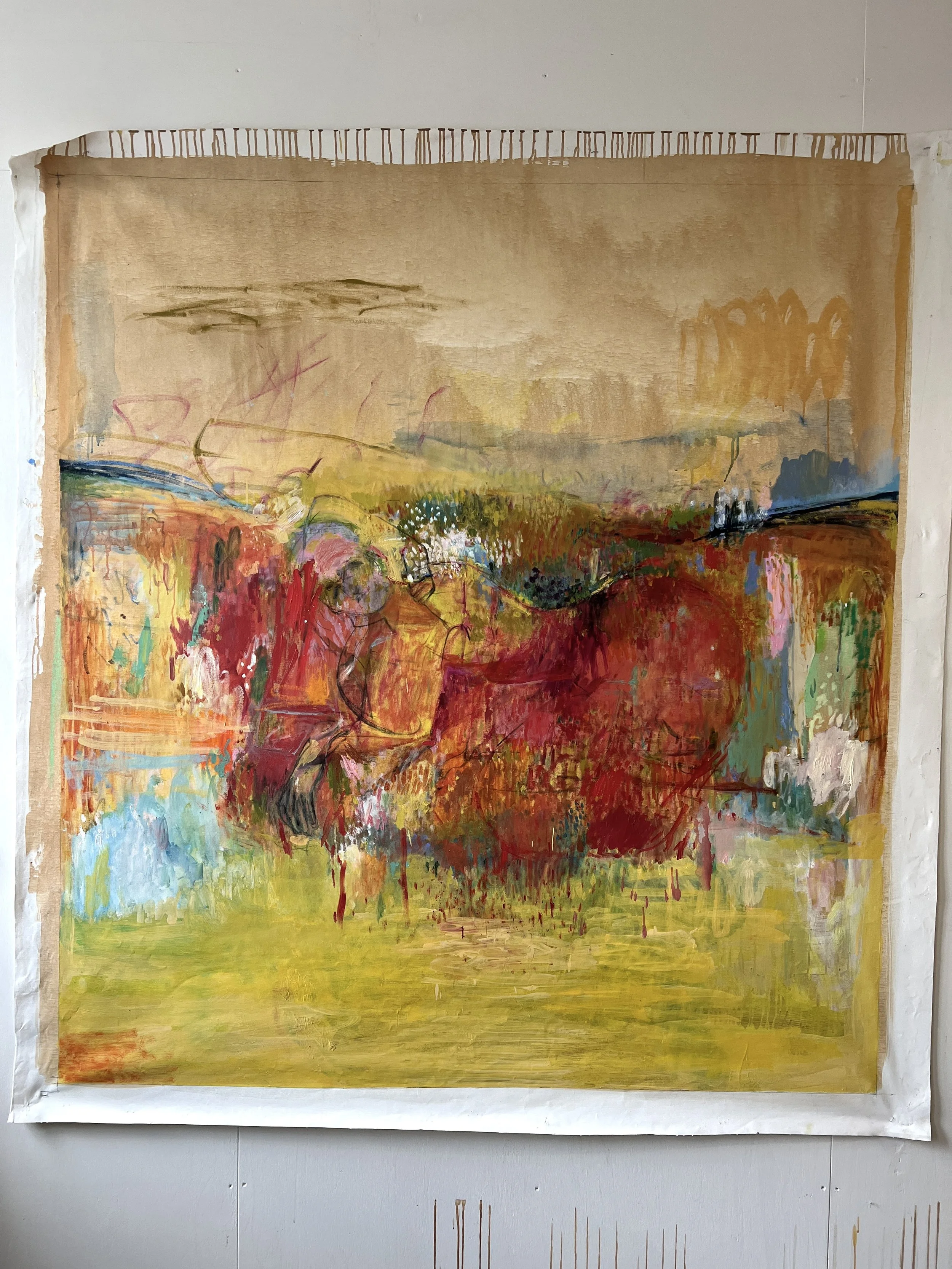
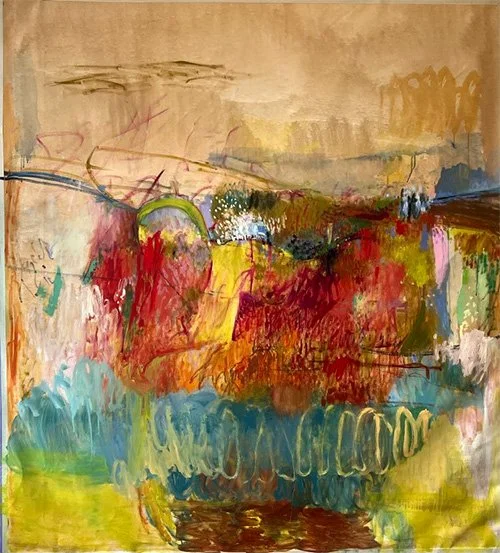
Everything I know about Yellow

Yellow wip

1650 x 1800 mm Oil on Canvas

Sally Barron

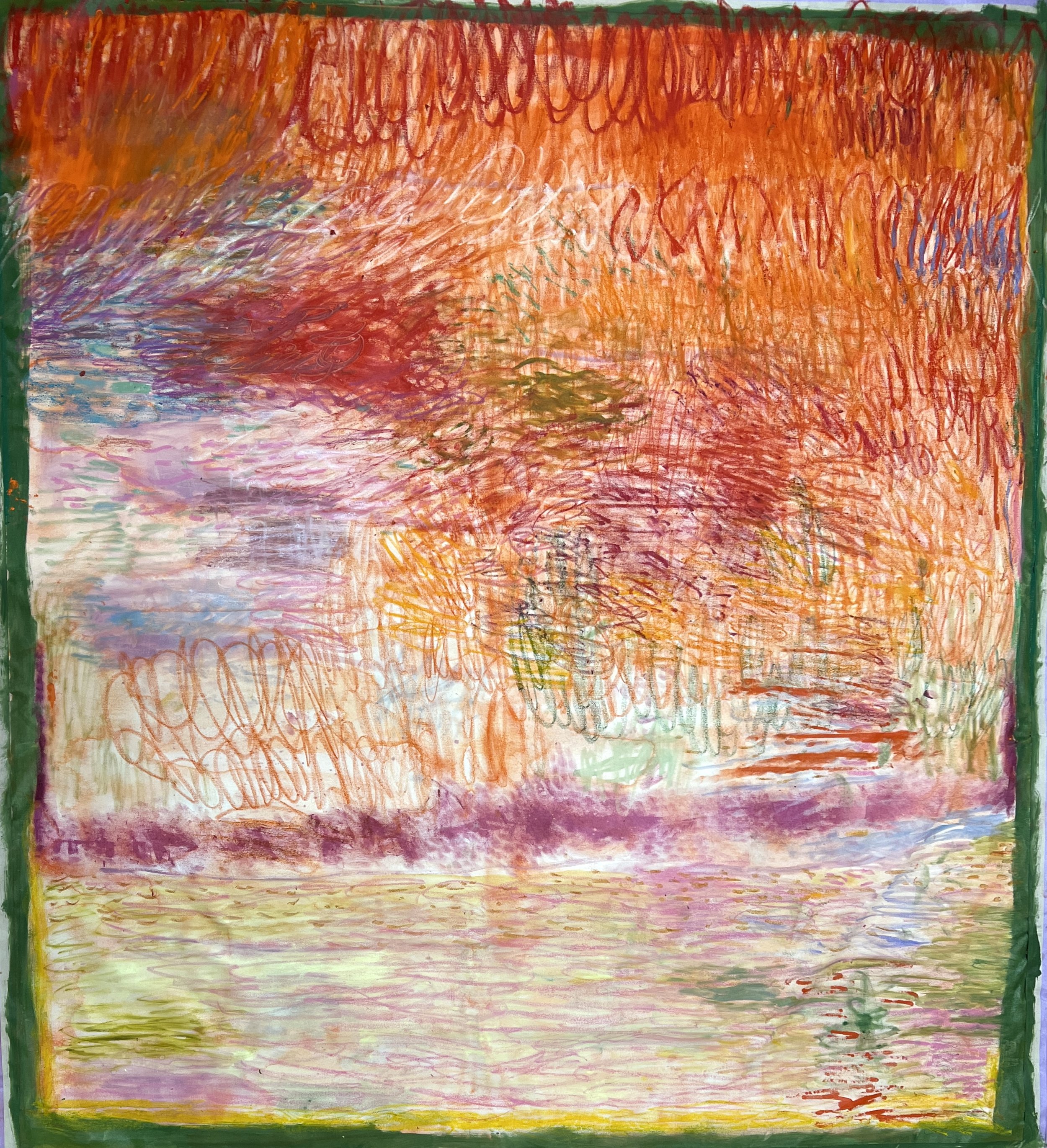
Everything I know about Red wip

1650 x 1800 mm

Sally Barron 2023

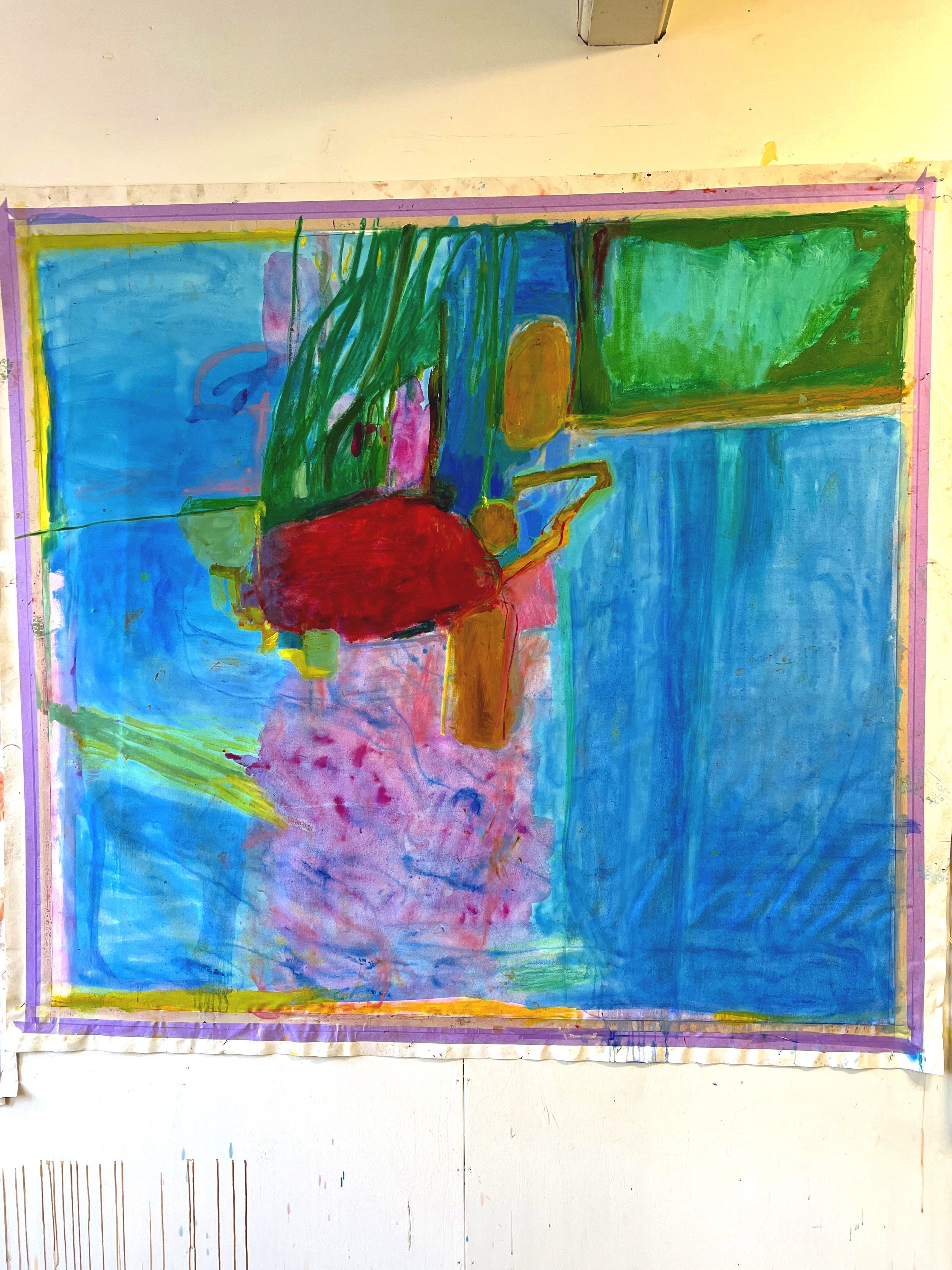
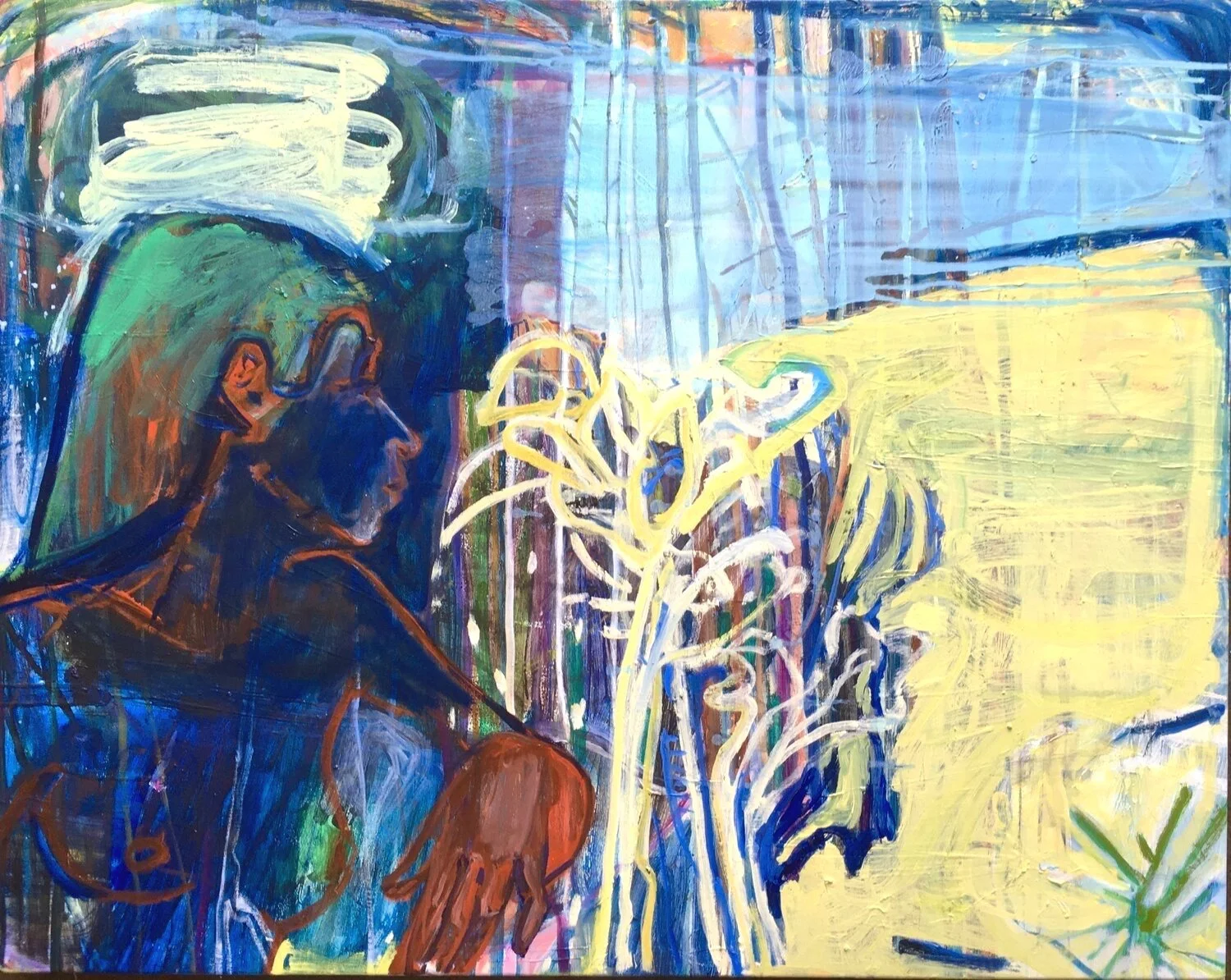
Everything I know about Blue wip

2023

Sally Barron

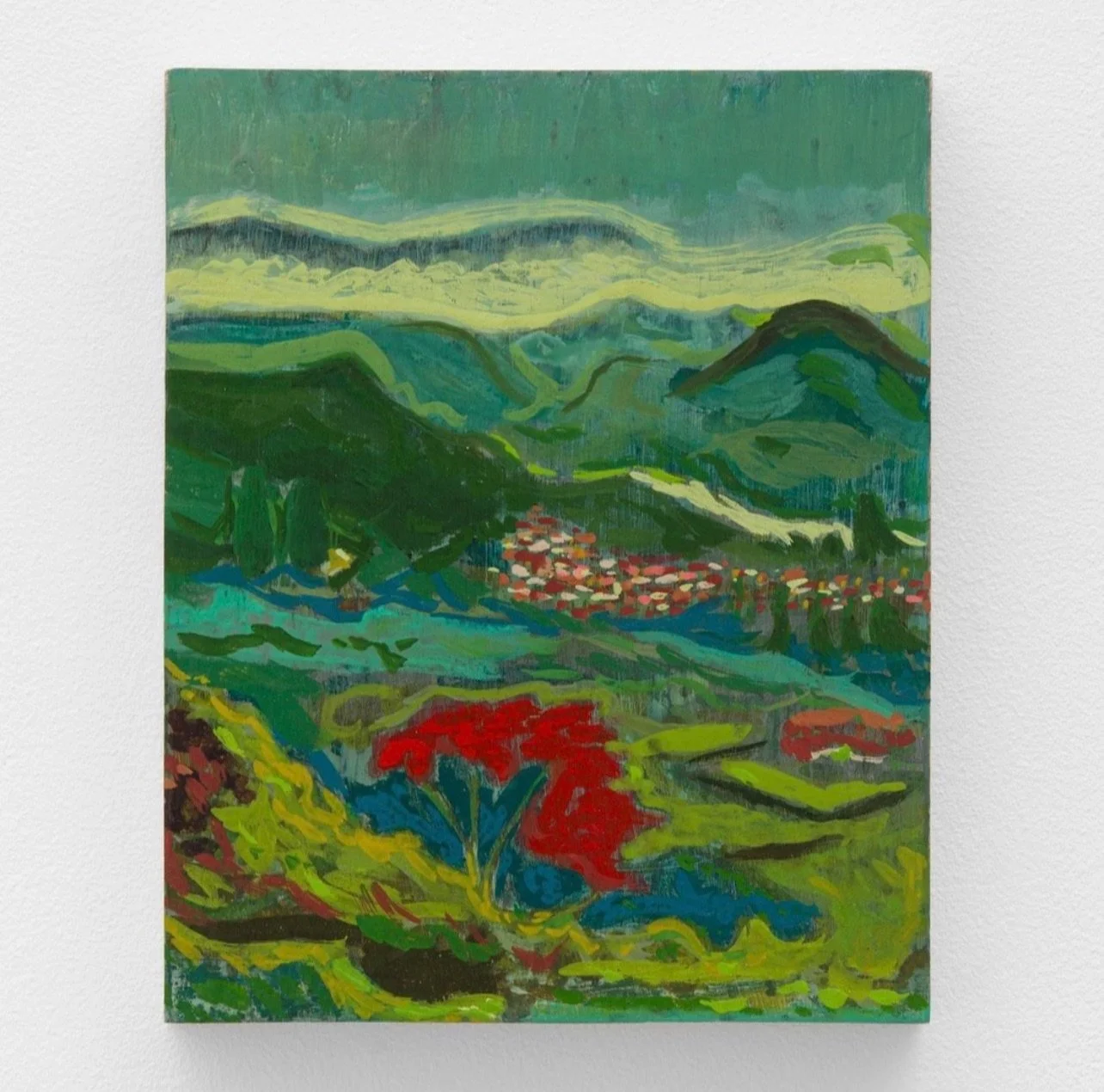
Walks from memory South Downs wip

Re worked

1650 x 1800 mm

Goal for next week - collage that starts from found materials, create this using one of my en plein air drawings, then paint it.

Yellow - find a wide range of simple forms which may be said to be this colour. Look for variations within the hue, eg warm yellows, cool yellows, and variations within the tonal value, eg dark and light. Try also to identify the colour with the highest chromatic intensity, eg the purest yellow, and compare this with the more neutral counterparts.

I will aim to glaze once they are finish with a single translucent glaze over the layers, red, blue and yellow.

Noting the colour is enhanced by complimentary pairs. Pale colours (formed with the addition to white) seen next to its neighbouring hue on the colour wheel, eg pink (tint of red) adjacent to orange. Also looking at paintings by Seurat for example there is marked contrast of tone around bodies, the light side has dark adjacent and visa vera. This imitates the human eye which perceives the same background tone as darker around a light object and lighter around a dark object.

I have been reading about the dates when different colours were invented and trying to use the ones that are of interest to me that artists I admire used.

for example Emerald green and Viridian were introduced in the 19th Century.

Vista

Isle of Wight 2023

Oil on Canvas

Copy after Bruegel the Elder

Starting to copy a painting from Bruegel every time I come into the studio as a ‘warm up’. This proves to be surprisingly helpful.

Post 20 - Studio

- Empiricism is the start of the imaginative journey...

Back in the studio I started re examining my en plein air paintings and drawings, looking at the differences between my tone on tone colour blocking and more drawing/paintings

Sally Barron

Isle of Wight 2023

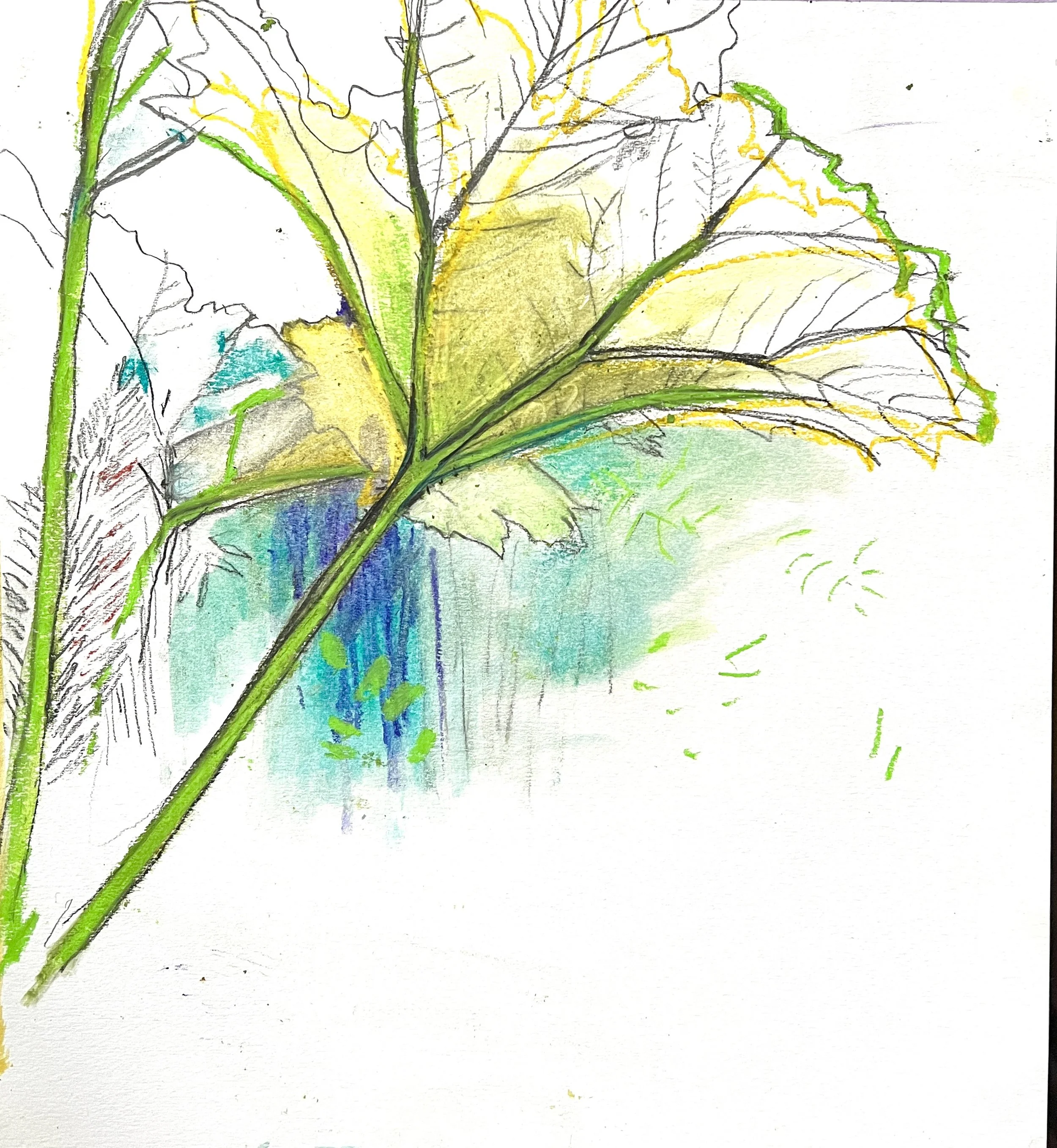
Gunnera Plants

At the end of my stay in England having been painting en plein air, I then did a days drawing at the NATIONAL GALLERY LONDON.

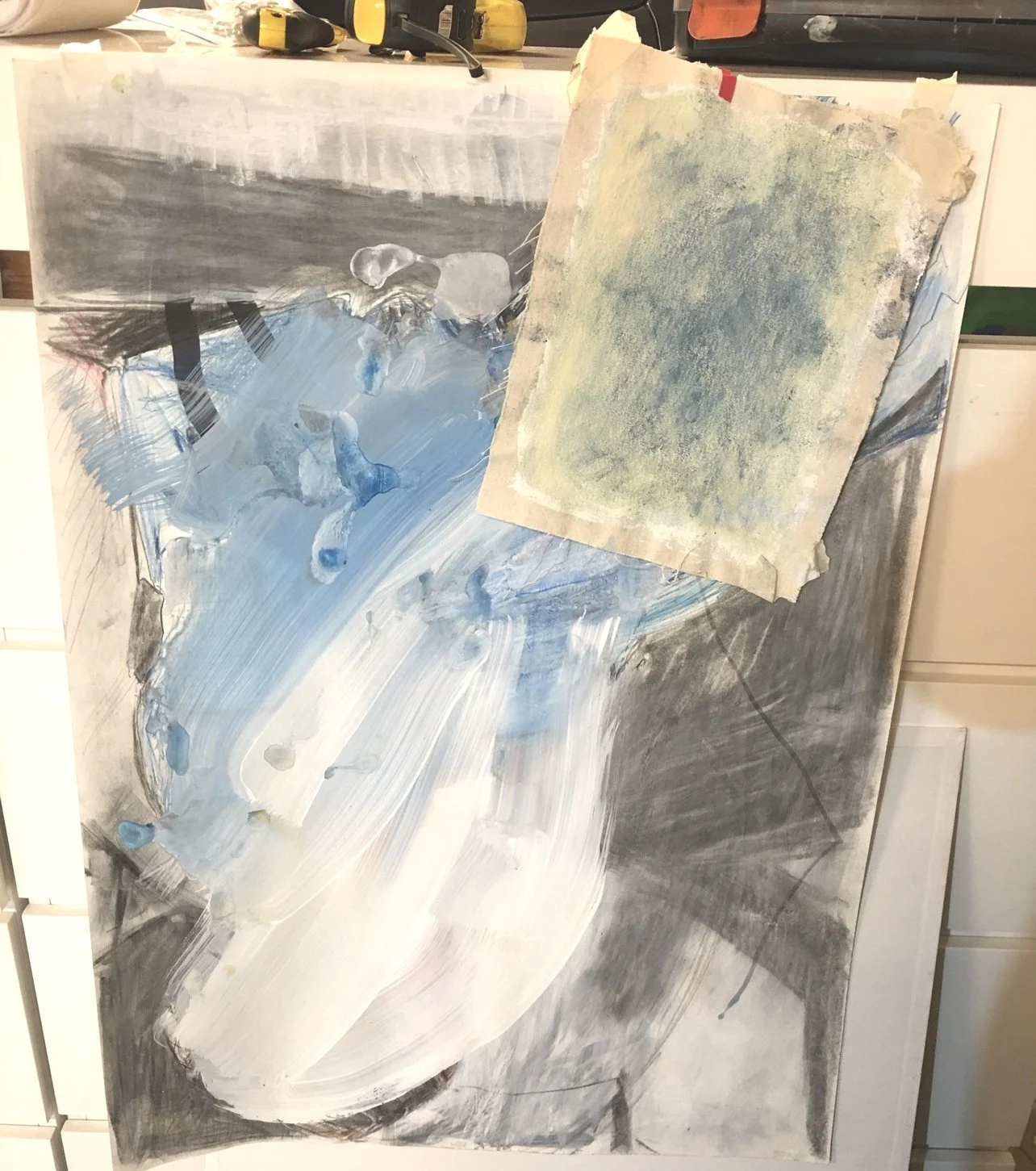
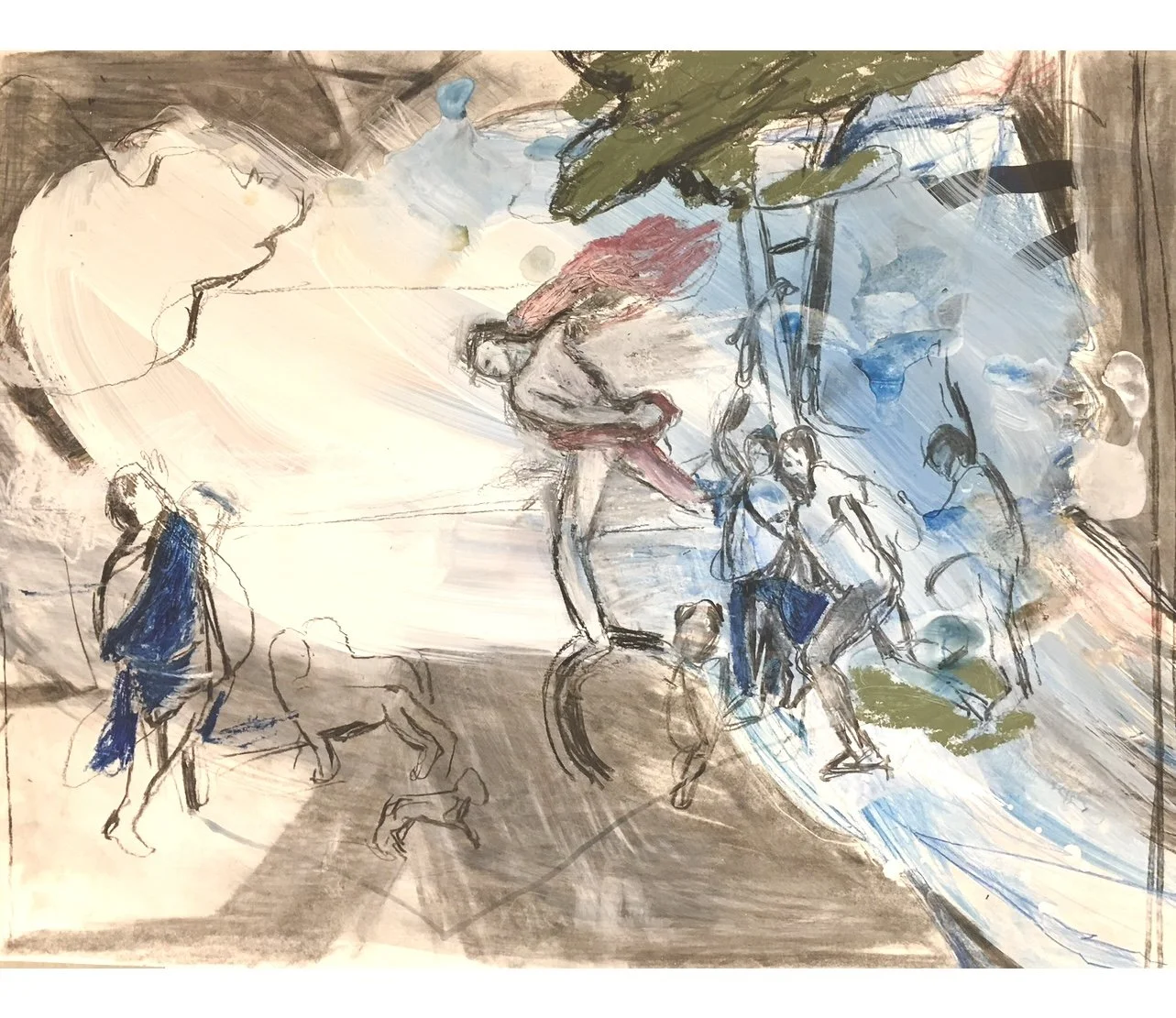
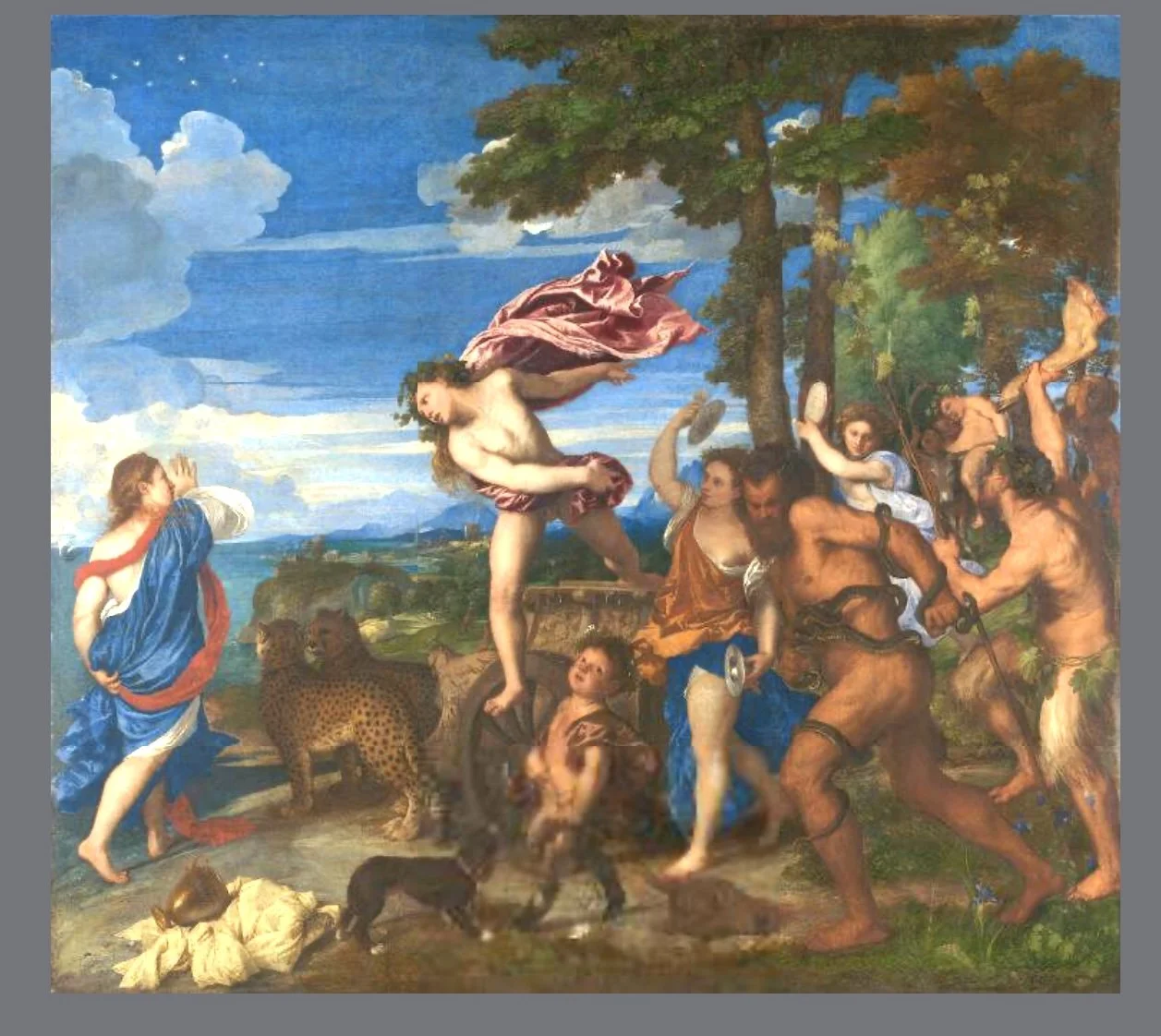
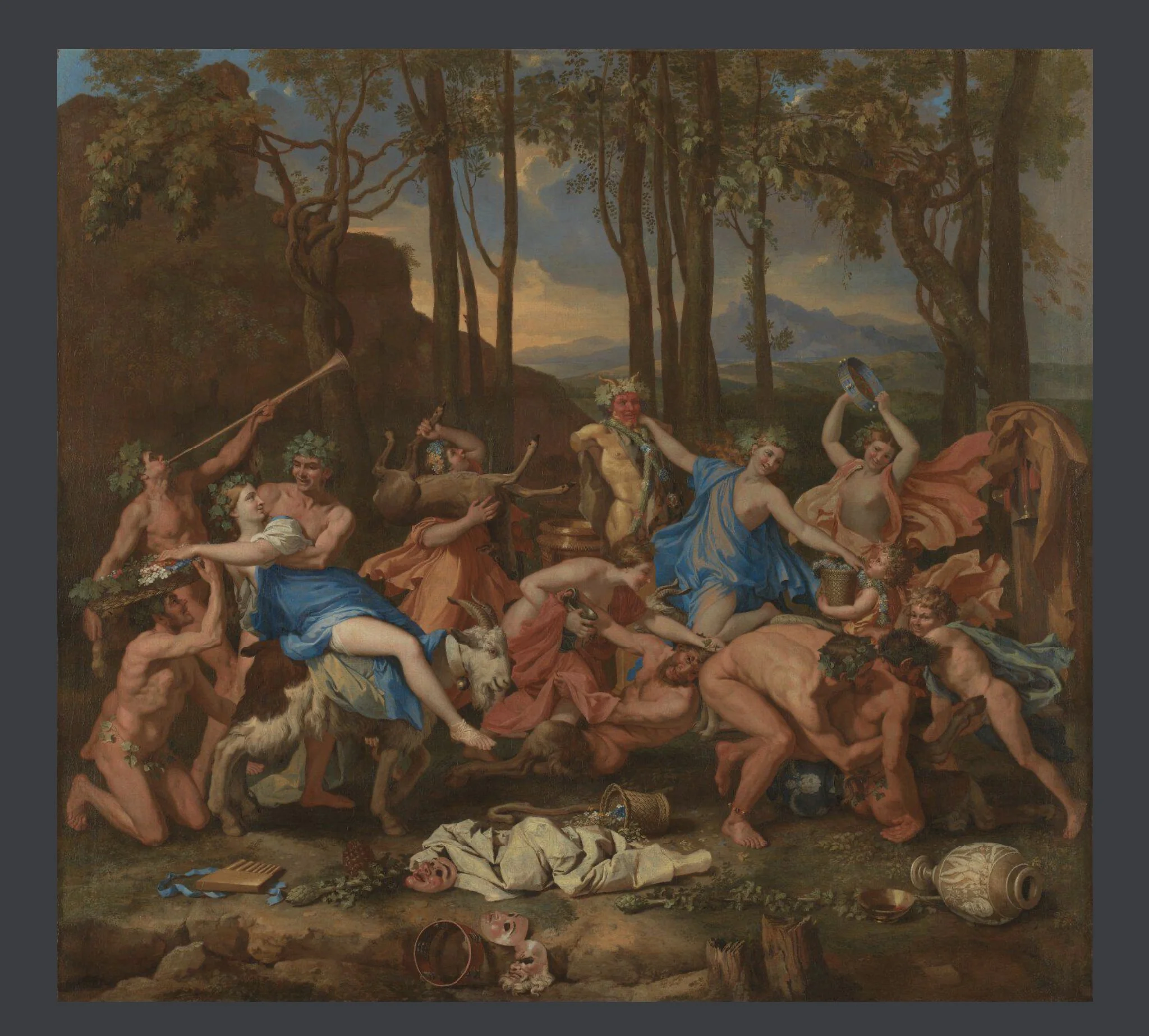
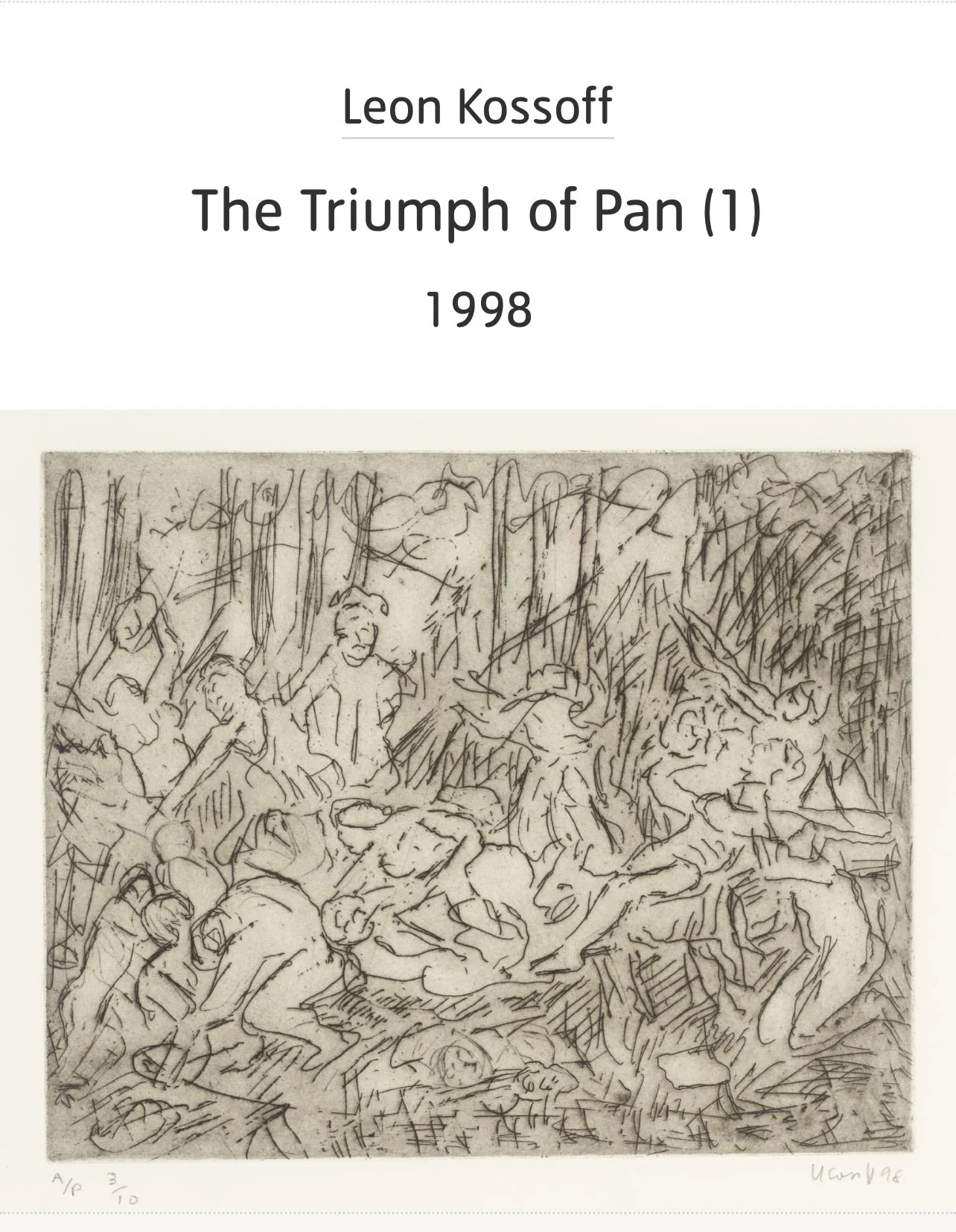
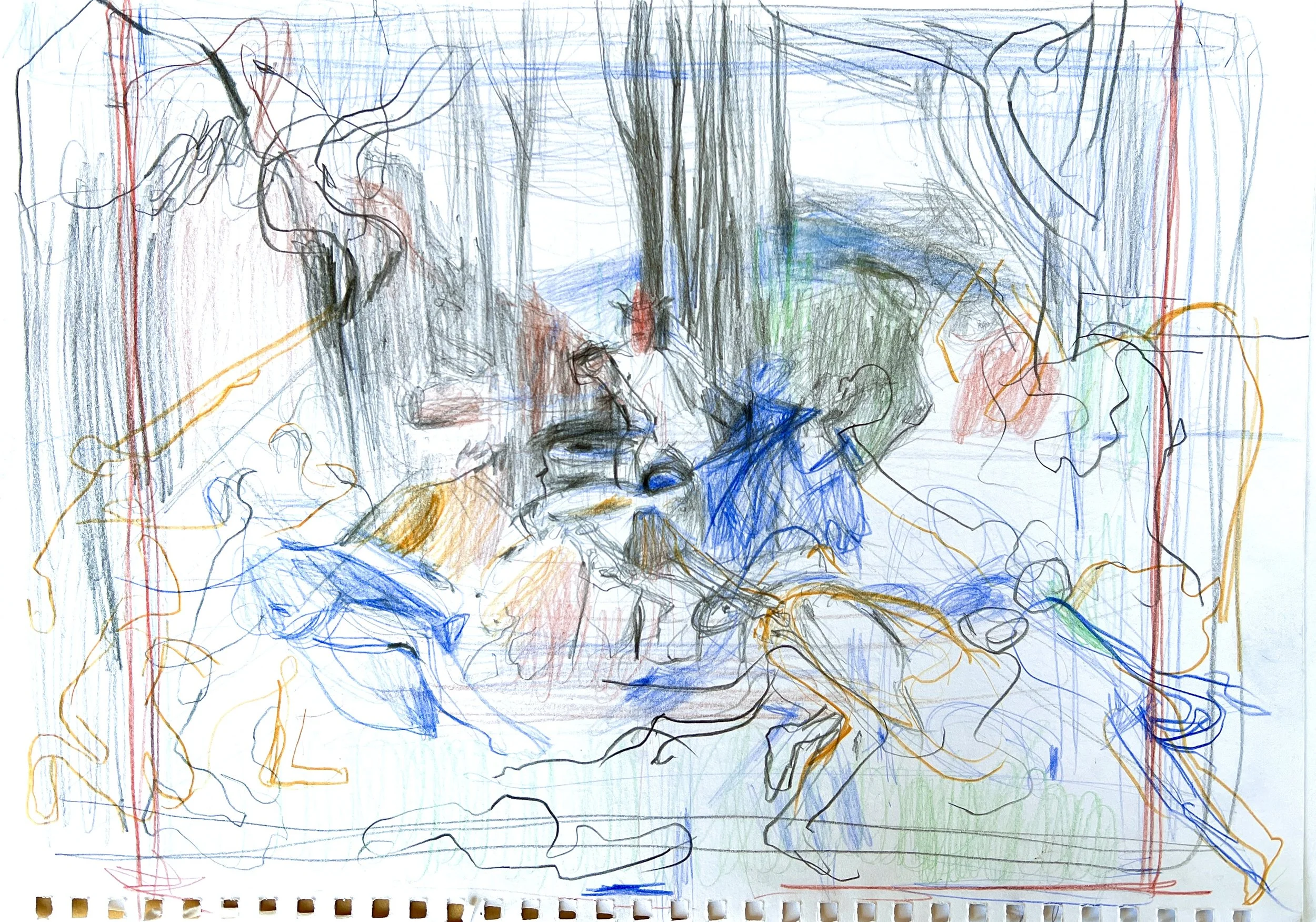
Anyone can borrow a chair to sit and draw but must use a non-liquid medium. Having done a copy of Bacchus and Ariadne by Titian during lockdown, I went to draw from the real thing…but it was removed from its usual place for a new exhibition. Instead I copied the Poussin in the next room, and upon my return to NZ discovered Leon Kossof’s copies and etchings of the same subject! I had known about Frank Auerbach’s drawings and paintings during a residency for the National gallery, but had forgotten about Kossoff.
I have always loved his ‘Childrens Swimming Pool, Autumn afternoon’ 1971 which someone described as a painting about noise…

Anyway it makes me think about the senses, driving my paintings, touch, sight, sound etc

2020

Salt Barron

Building texture and background

Sally Barron

copy from reproduction (lockdown)

Copy from Titians Bacchus and Ariadne 2020

Titian 1520-23

The National Gallery

Bacchus and Ariadne

Poussin

Triumph of Pan

1636

Leon Kossof

Etching after Poussin Triumph of Pan

Triumph of Pan

From Original

Sally Barron

2023

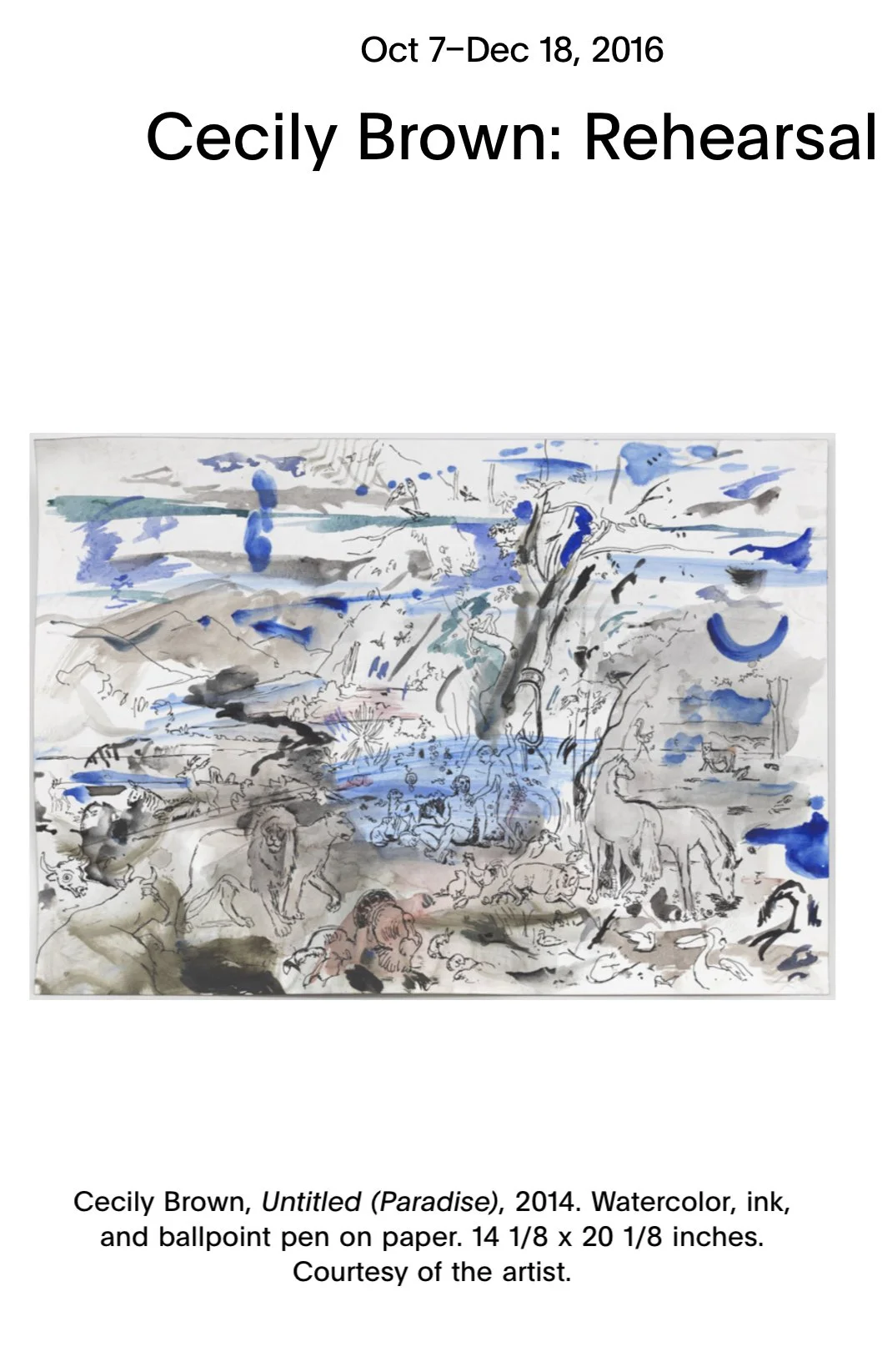
I had also been looking at Cecily Brown’s work as she draws from art historical references, literally drawing every day from reproductions, and says “Ive only really understood a painting once I’ve copied it”

At first this seems different from the en plein air, drawing from a static image but the process of looking and total absorption in the exploration of the composition etc leads to the same stimulation - all knowledge based on experience derived from the senses.
Good insights into her current practice.

https://www.metmuseum.org/exhibitions/cecily-brown-death-and-the-maid

https://news.artnet.com/art-world/cecily-brown-met-museum-art-history-references-2277258

re thinking again about drawing as a very important part of my practice - they are part of my process, inchoate, leave things in an unfinished state, visualisation of observation. I draw to open things up, and question.

I re read Walter Sickert “Drawing is the thing”

there is a certain ‘ennui’ about his work, quick lines then re working with emphasis, then spatial emphasis, grid then paint. (I can use projector or draw on tracing paper and use to try out ideas like cartoon collage Doig)

People who’s work I can look at further

Amy Silman - her drawings are enlarged, printed out, loosely painted over

Anne Ryan - she collages, cuts out and punches through

Luci Eyers - Painting from Greek paintings

drawing during lockdown 2020

Sally Barron

Colin McCahon

Sketchbook

Post 19 - Auckland

Visit to Demo Studio 8th June

to see group show by “Open Studio”

Laila Chung, Patricia Fung, Michelle Reid

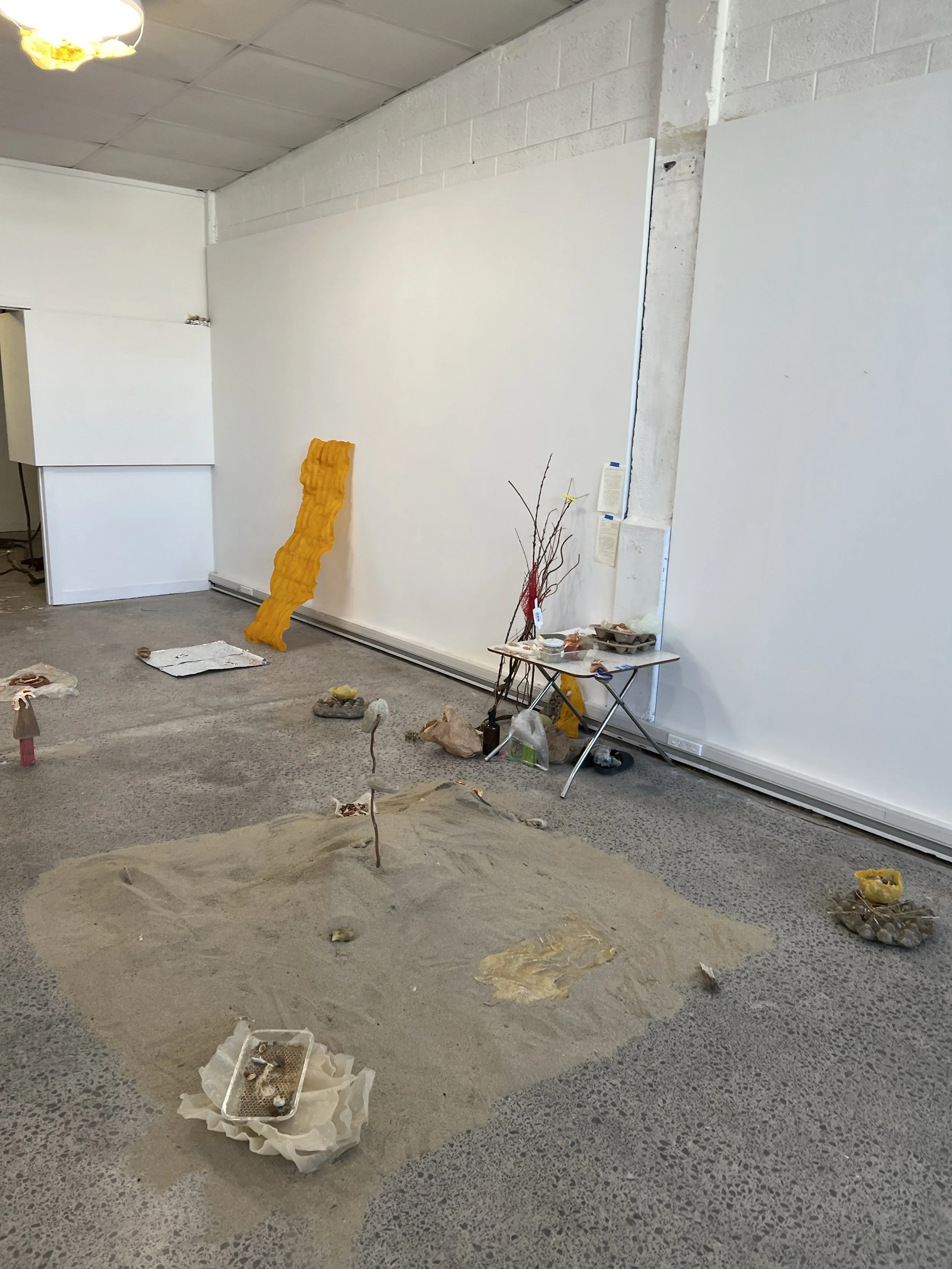
Wonderful collaboration between these artists, pushing boundaries with 2 and 3 D work. I got to have some interesting conversations on setting up work in the space and how they have been developing their original ideas further this term.

Sparked off more thoughts on working on the ground with my larger paintings.

Michelle Reid

patricia Fung

Laela Chung

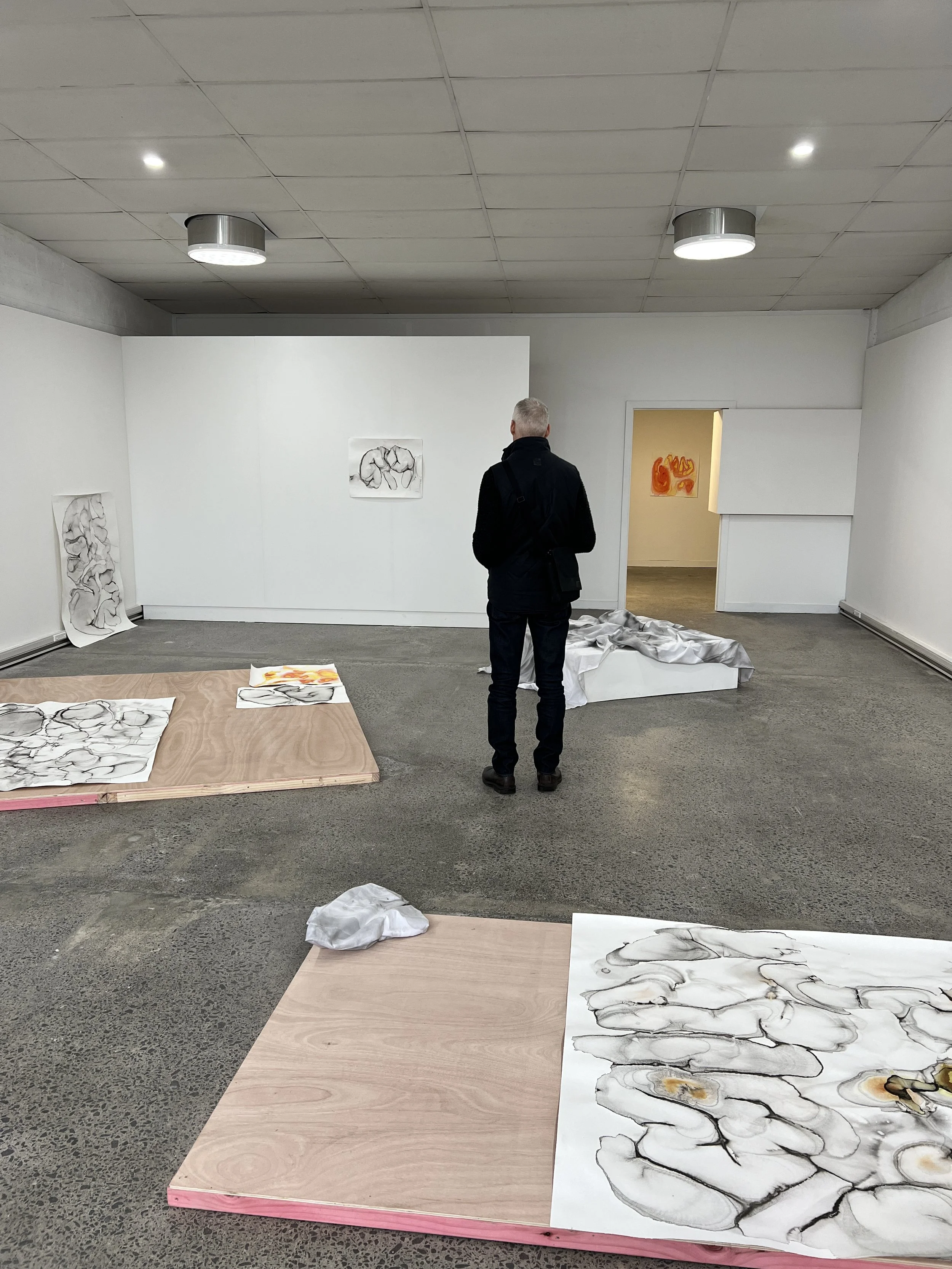
Next Demo Exhibition was a solo one by Jessica Webb

Again the idea pushed further of working on the ground, her partner and herself creating creases in the paper then allowing ink to run across this, then re working if needed. Jessica has been exploring colour this term after mainly using black ink previously.

I really liked the thought gone into the placement of the work and especially the wooden panels with the natural grain echoing the ink drawings

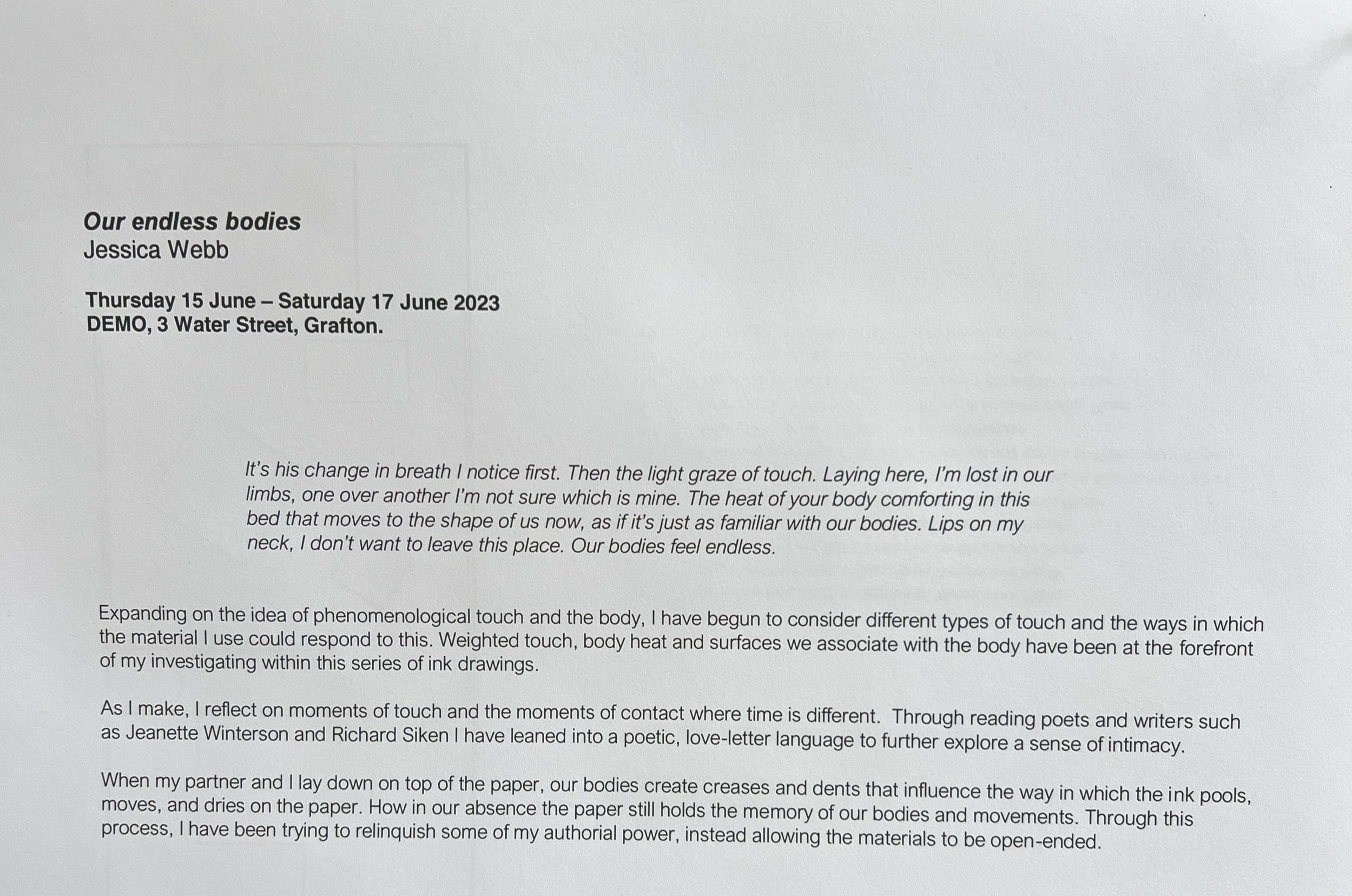
Jessicas artists Statement

Post 16 - Isle of Wight Residency

Painting en plein air 6 day residency Northtcote House

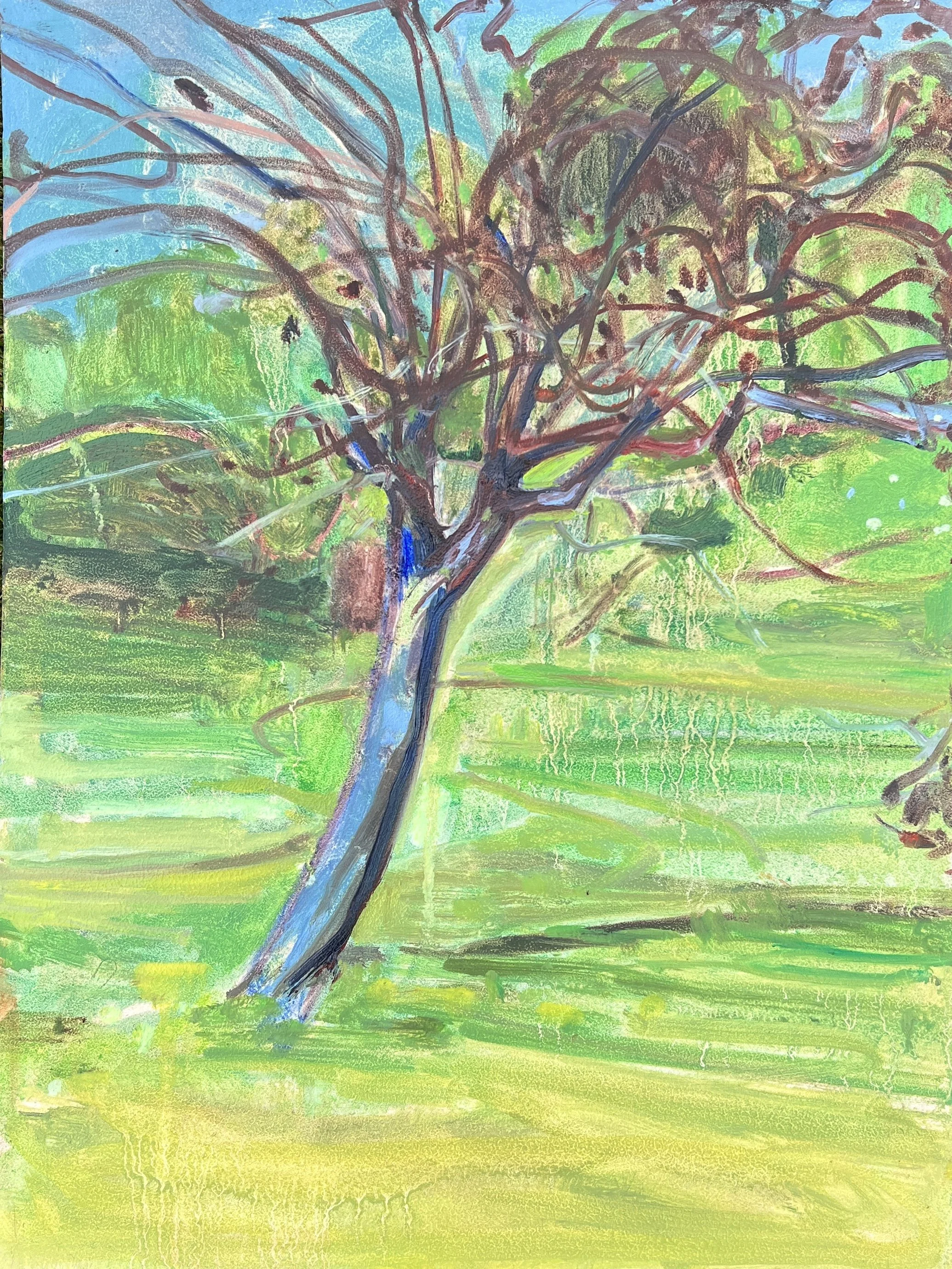
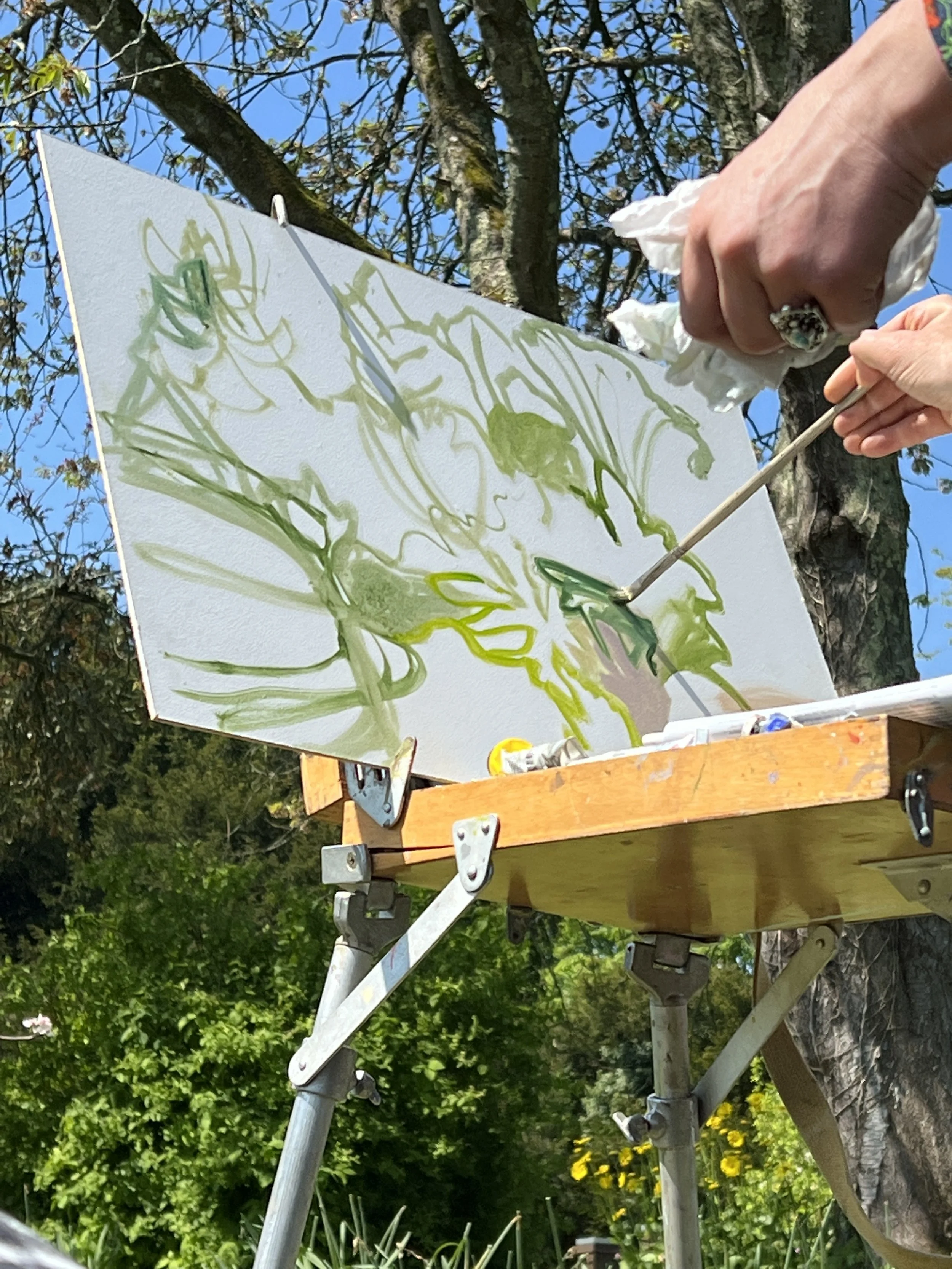
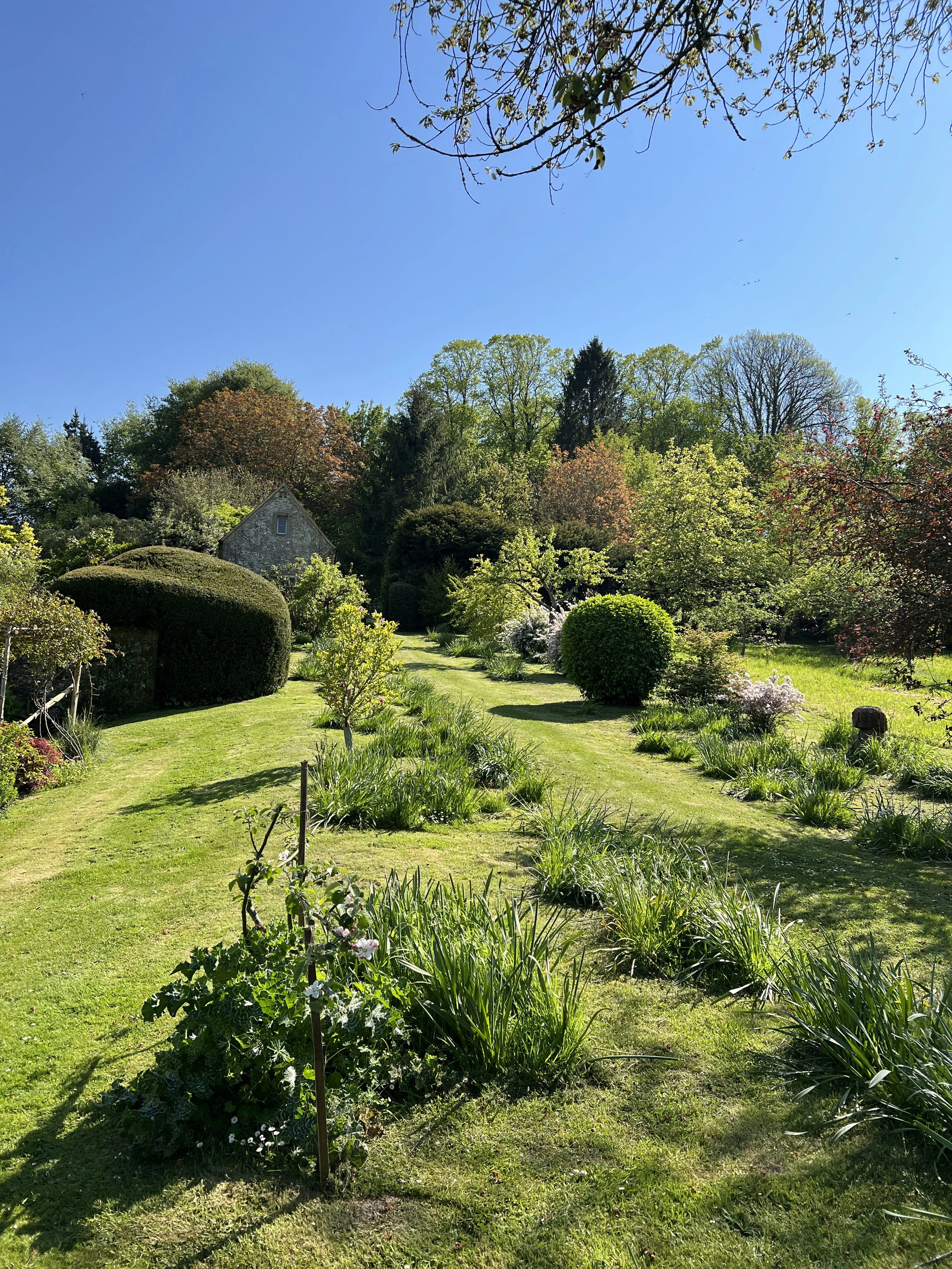
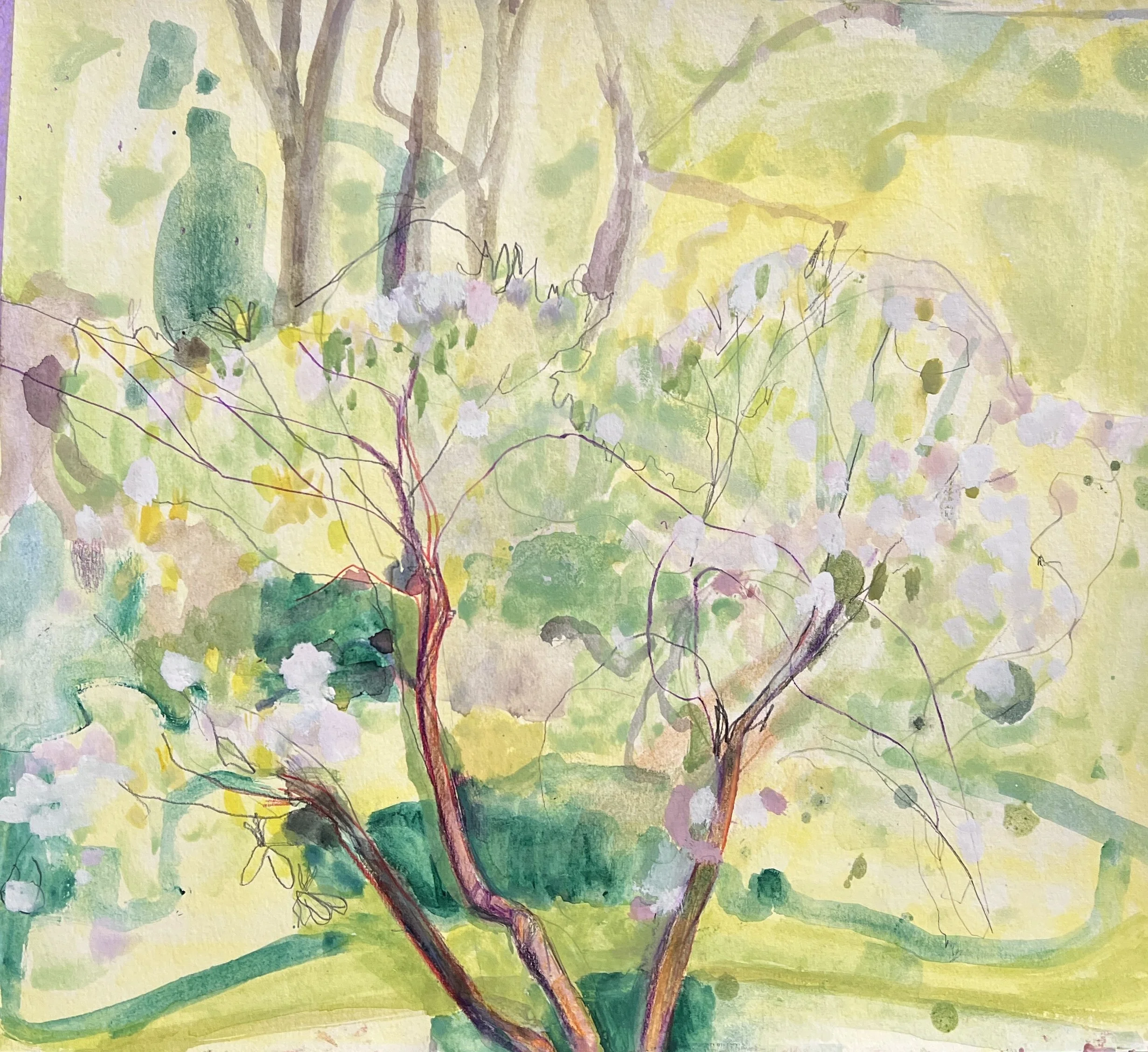
One of the best things about painting there is the continuity of care given to the gardens. The same family have lived there for 40 years and we were given a tour of the gardens by the man who has devoted himself to the design, planting and care of the entire 15 acres. The stream, kitchen gardens and the terraced walks are all grown according to their position (were the sun and wind affect them etc), and co-dependant on one another, the kind of knowledge that has helped it be so successful in growth and layout is only gained from living and working on the land. I am not a gardener but once immersed in the landscape it becomes clear the interlinking of each plant and how there is never a ‘wrong’ design in nature. Organic forms are so perfect to draw blind contour (not looking at the page), and using colour washes to describe tones and light got easier with practice.

learning new skills and methods

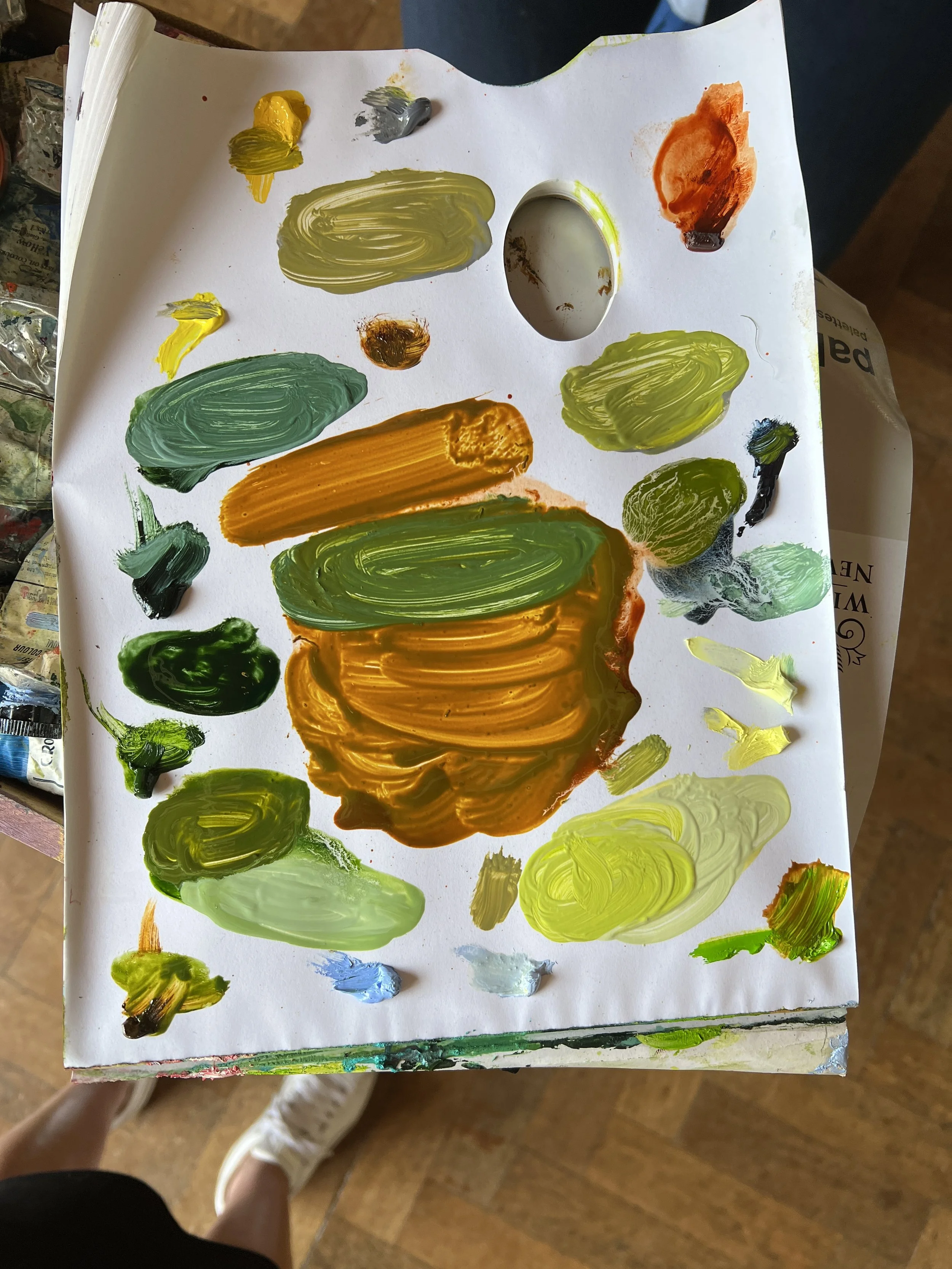
disposable pallet

primed board

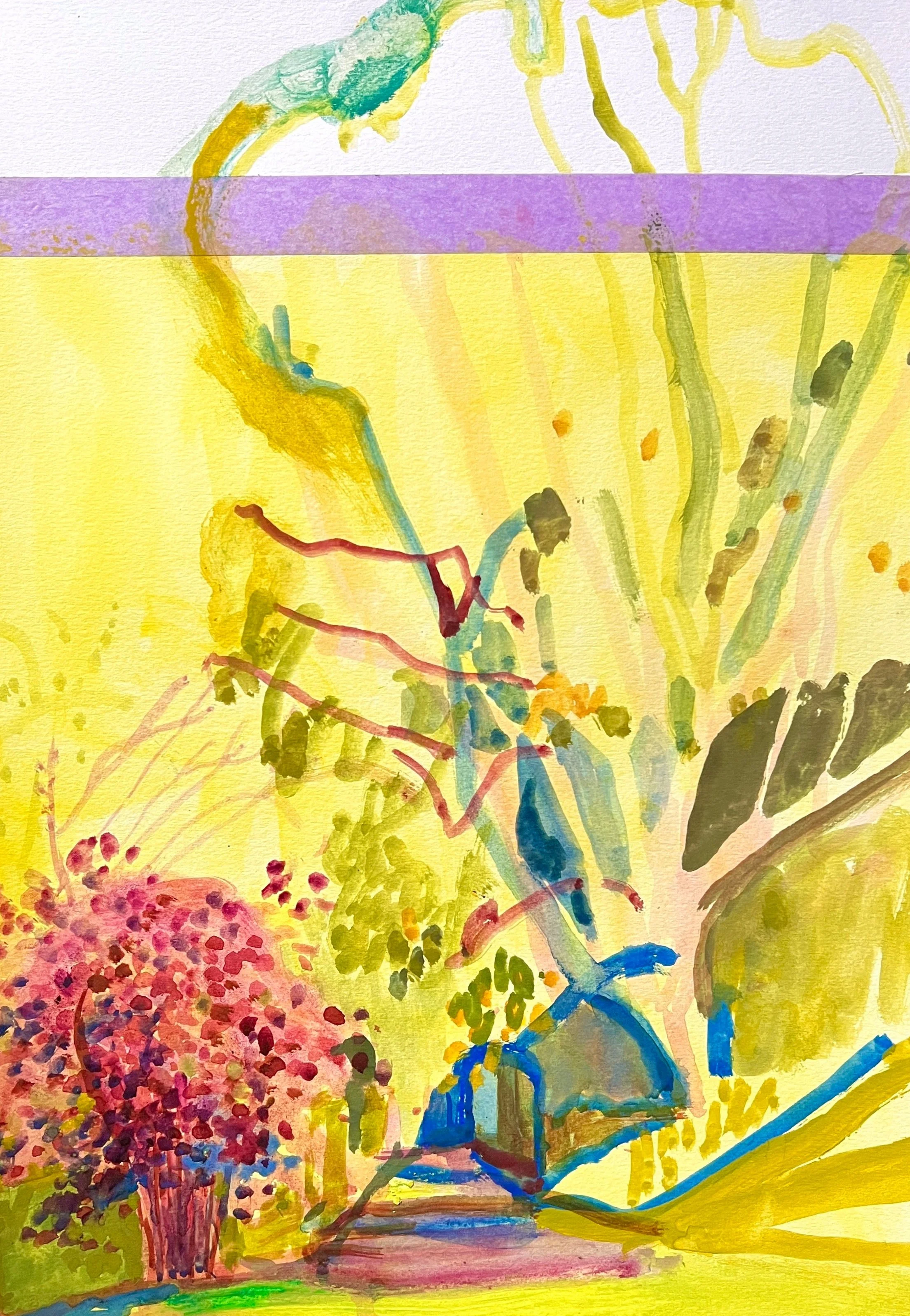
Gardens Northcourt House

Gouache and pencil on heavy weight paper

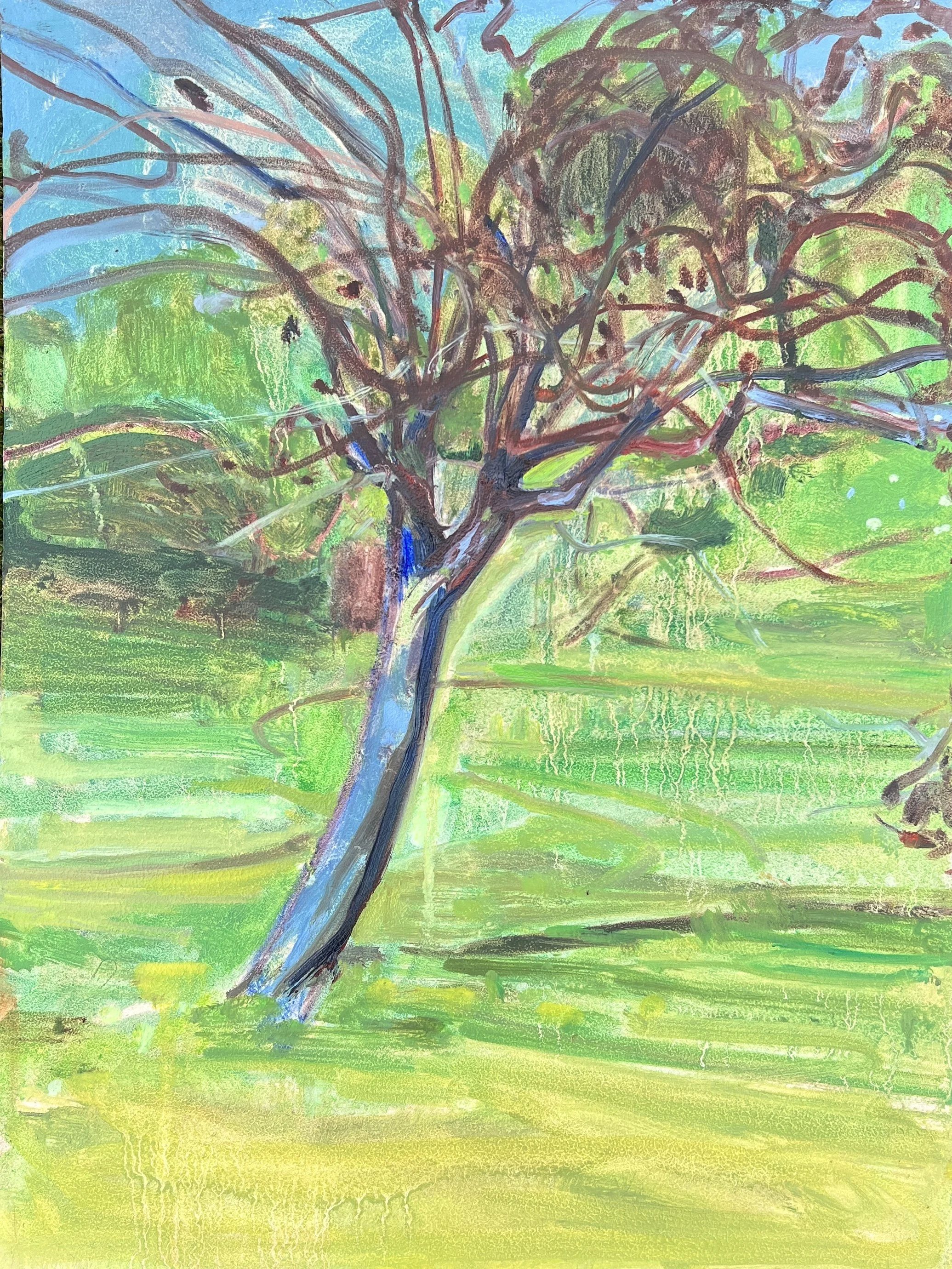
crab apple Tree

Oil on board

east view from kitchen garden

Learning about different light at different times of the day. Also considering shadows. concluding that is was best to stay in one spot for the morning then move for the afternoon, even if I went back to the same place the next day, I tried to do it at the same time of day. A method employed by impressionists such as Monet, who would return again and again to a designated place, to capture the light at differing times.

disposable palette, creating a ‘mother’ colour that then becomes others.

Learning new yellows and blues

views through

vistas

favourite tree of owner (planted magnolia 40 years ago)

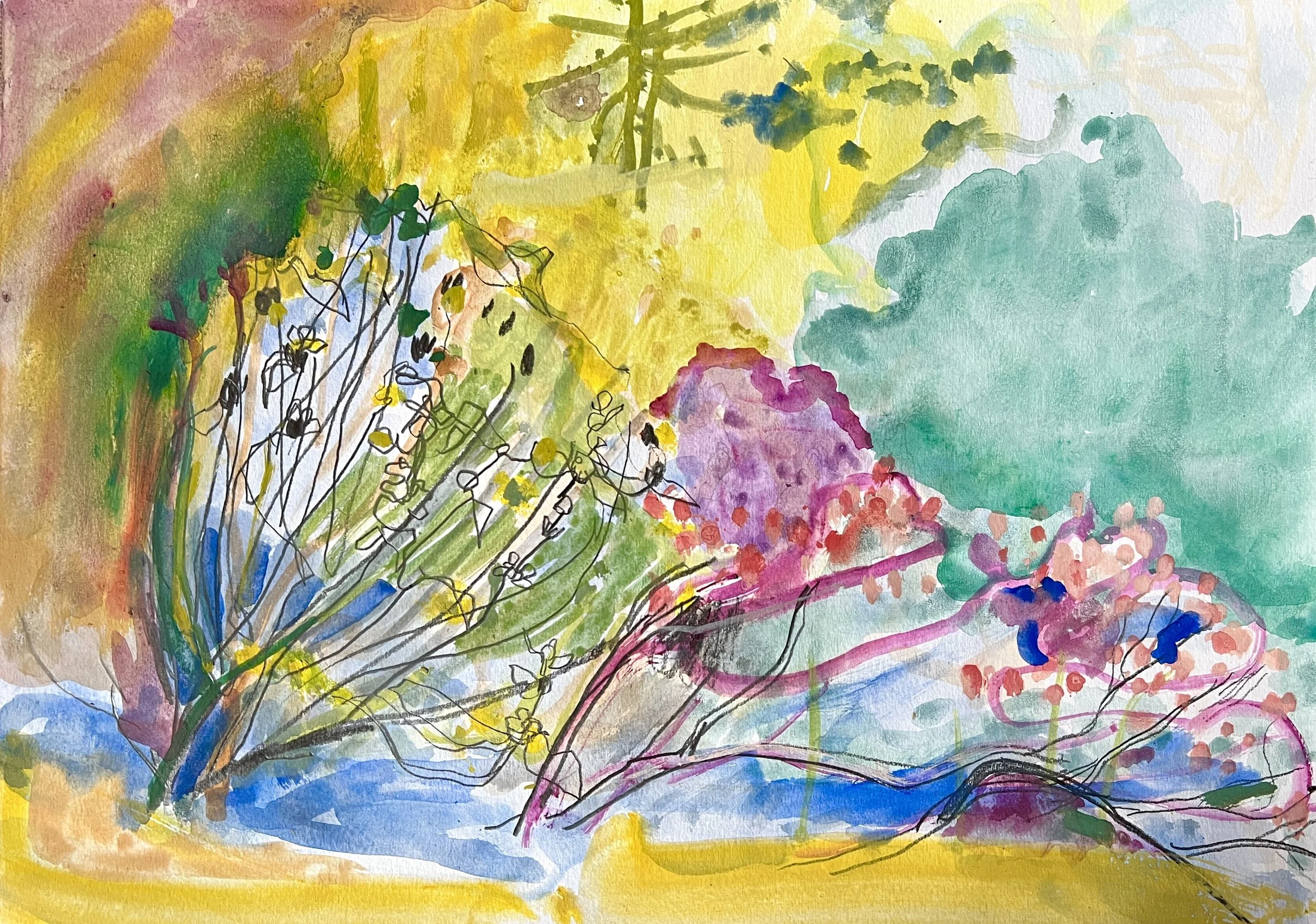
hydrangea

interlocking forms goauche and pencil on weighted paper

4.The Victorian sensibility.

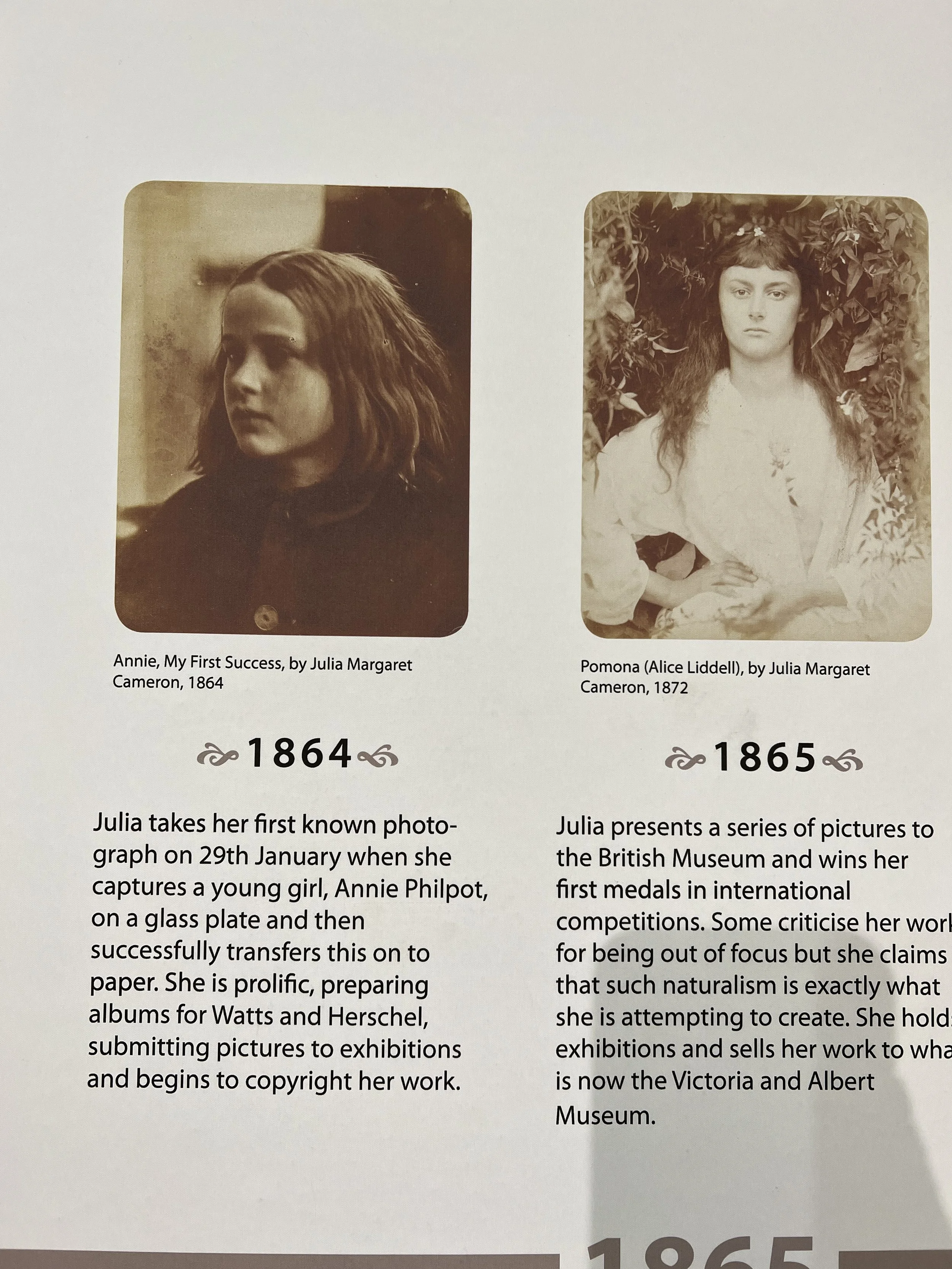
Visit to Osbourne, Tennyson’s and Julia Margaret Cameron’s Houses

Julia Margaret Cameron exhibition at her cottage in FreshWater, Isle of Wight

Post 15 - London - 'Painted Spaces'

Given the limited time I have in the UK I have focused in on the period of late 19th C and early 20th C European artists that particularly interest me, as outlined earlier in my artists statement and questions and answers documents. This is also a painting era closely observed by Peter Doig and the Courtauld

Courtauld Gallery London

The Morgan Stanley Exhibition: Peter Doig

My trip to the UK WEEK 1

Visit 1 to the Courtauld to see Peter Doig exhibition

fig 1

Night Studio 2015 (detail)

Oil paint on canvas

His self portrait ’Night Studio’ fig 1 above shows him standing in front of his own painting ‘Stag’ (2002-05) adopting the pose of the man in that work who clings to a tree. The painting gives a sense of how Doig’s work feeds into one another, the process of painting undertaken as a continuous journey.

  • Pentimenti - the leaving of marks made previously - as seen in Monet for example.

  • Gesture - Daumier especially

this work is Reminiscent of Gaugin’s The Dream fig 2 in the adjoining room to the Doig exhibition, Doig drew much inspiration from these painters. The scene behind the 2 women could be a doorway to the vista beyond or possibly one of Gauguin’s paintings propped up behind them.

fig 2

Paul Gaugin, Te Rerioa

1897

In his Self Portrait Fernandes Compound, Doig (fig 3) uses pigment as a stain on the canvas, covering large areas with thin washes and building up others with denser opaque brushwork.

Fig 3

Self Portrait (Fernandes Compound )

2015-23

Fig 4

Alpinist

2019-22 Pigment on Linen

The preceding large room shows many great works from the 19th C France impressionists and post impressionists, I can see the influences these works have had upon Doig’s work, and in particular notice many details and techniques or rather accents and emphasis that he has chosen to use in his work. see below.

Boating, music, travel, solitude, exploration, the resonance and vibrations in nature echoing off the canvas, in light and colour filled emotions. Doig’s people are often still, ancient Greek-like in their stature and pose. fig 4

Echoes of the Kouros figures beloved by Bonnard amongst others, not representing individual youth but the idea of youth.fig 5

fig 5

Redman sings Calypso

Statement from the Courtauld…

The subject matter as well, the lone person in nature found in Suerrat for example and many others.fig 6

fig 6

Georges Seurat (1859-1891)

The Angler c.1884

oil paint on wood

As a painter I can clearly see the kind of detail that has caught Dogs attention from this collection. See below the treatment in the hats in Manets and Doug subsequent work. fig 7&8

fig 7

Edouard Manet (1832-1883)

Banks of the Seine at Argenteuil 1874

Oil on canvas

fig 8

House of Music 2019 - 2023

detail

Peter Doig

(again reminiscent of one of the figures in profile for Gauguin’s the dream, also the banding of his hat echoes the hat in Manet’s Banks of the Seine above?)

further reading

https://courtauld.ac.uk/whats-on/peter-doig/

https://samblog.seattleartmuseum.org/2017/05/seeing-nature-monet-manet-impressionism/

https://rosiemusgrave.wordpress.com/2015/01/29/to-what-extent-is-doig-and-bonnards-obsession-with-the-texture-and-colour-of-paint-in-a-painting-just-as-important-as-the-portrayal-of-the-subject/

Post 13 - Seminar week 11-15th April

Artefact as Text

Tuesday 11th April

Introduction to Autumn Seminar

Artist talk - I focused on the key ideas important to me

  • light

  • time

  • editing

  • context

Sonya Lacey

Totally Dark (Chrorophyll) at Dunedin Public Art Gallery

She talks about Infrared light illuminating an object without drawing attention to yourself, this light is not for humans or animals, it is reciprocal with chlorophyll, scientists use it to test the health of plants.

what do I think about light?

she uses the camera as an extension of herself - it augments her sense of the world. Her work also explores moving image expressing time, borrowing from Foucault with regards to work and power. Politics impose order on the world which is similar to artists working with form.

the politics of making work for a woman, time is carved out of domestic life

Editing Early Modern Women” by Sarah Ross is something I could explore further “editing is always an ideological intervention, it is transitive…”

I can find the meaning in my work by investigating the contextual ideas around work I love, this will bring me closer to my studio work.

Wednesday 12th April

Group Critique Briefing - Form Gallery

with Kerin, Molly, Esther and Mike, Yolunda and Henry

great opportunity to see what everyone has been doing in the last few weeks and to give and receive feedback.

the comments were

  • first thought it was a landscape, when I moved closer I observed the figure. Its interesting how it ‘pulls you in’

  • is it a landscape - it reads like a quilt

  • landscape re the title : is ‘Mother’ relating to birth, fertility etc?

  • it can be read figuratively, there an interplay and complications between the distances

  • colour theory. Fiery, energetic, violence to the colours

  • Is Mother opening or closing? the group says it helps show the figure, however there is a generalist, universality about it.

  • Modernist canon about ‘form’ or ‘mother’ the could inform the work

  • Colour ‘theory’ versus ‘feeling’

  • Red suggests ambivilance about motherhood 0- blood

  • heirarchy within the canvas - figure is centrally positioned

  • floor vs flow state (?)

  • gender Hierarchy, invokes abstract expressionism

  • sketching charcoal brings the figure out and captures movement

  • Colour palette - Henry notes the decisions around temperature

  • brushes? other tools?

Light from the Tate 1700’s to Now

We walk to see this show at the Auckland City art gallery together as a group.

Introductions to the start of show by Noel and Yolunda

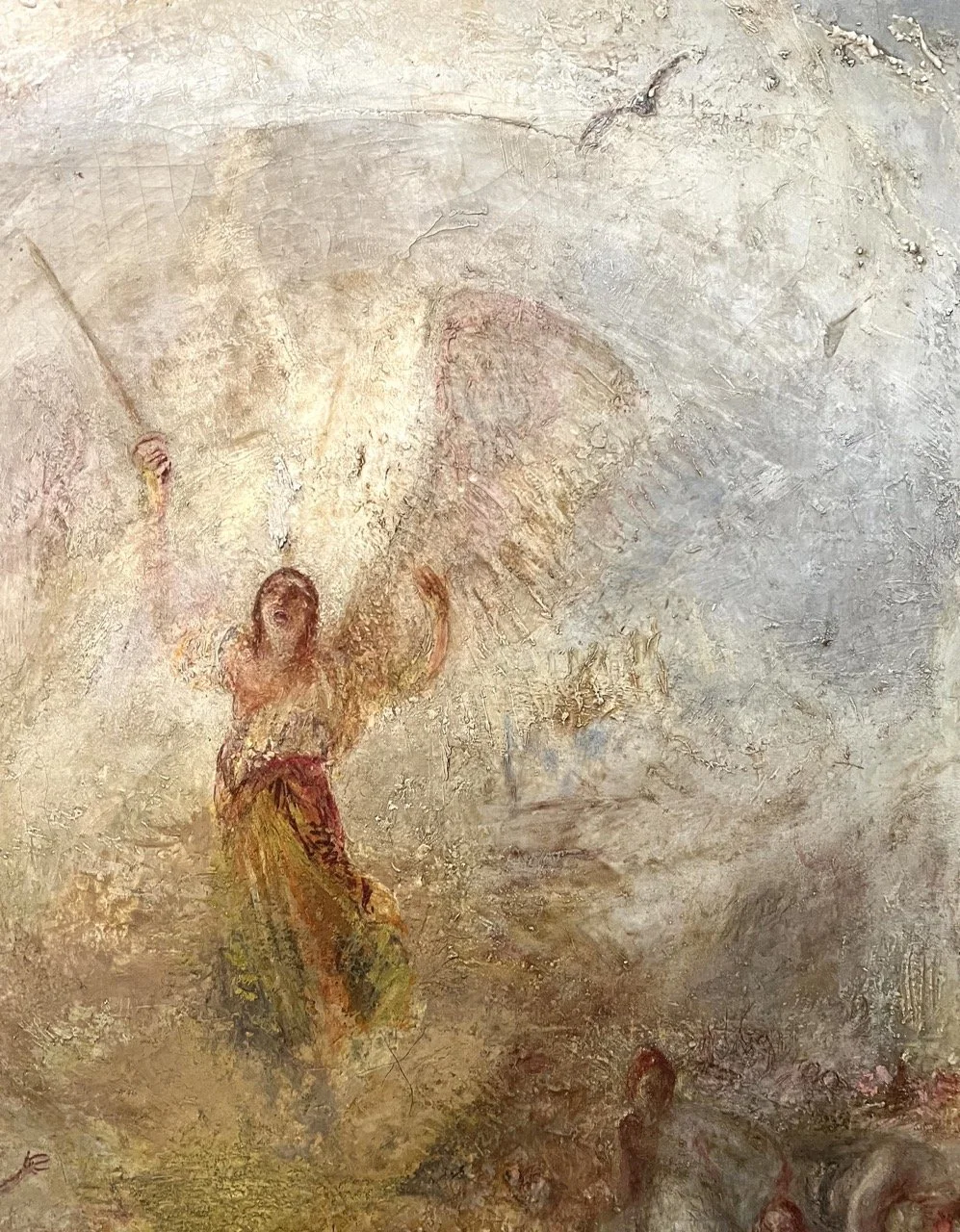
Detail of Turners

The Angel Standing in the Sun ext 1846

oil on canvas - JMW Turner uses atmospheric effects of light to amplify a sombre biblical theme from the Book of Revelation. The Archangel Micheal appears with his flaming sword, heralded by a rainbow, standing for truth and justice on the day of judgement.

Crit 2 Friday April 14th (day 4)

Molly, Kim, Michelle, and Trish, Yolunda - some of their thoughts

  • when standing too close, almost get lost in the chaos

  • Standing back reveals lines and shapes

  • enjoying the variety of marks, it doesn’t settle, something more spontaneous

  • some marks more deliberate, others more spontaneous

  • ‘fauvism’ hard to read the colours

  • Hills are landscape marks

  • which is first - abstract or figuration. Bits that are concealed or revealed

  • enjoying the extra dribbles of inverted gravity

  • that are productive/non productive marks?

  • enjoying certain sections - perhaps one to many elements - like the fresher colours, some perhaps muddy - scale of the marks/concentration

  • if the figure was looser and less centered

  • Sarah F-?

  • read from left there is a confidence in the marks

  • red is a nice punch, strong colour associated with love, blood etc

  • less marks in the landscape is successful

  • skilful in colour, maybe focus on this

  • Its not about learning something new its about recognising what you have!

Post 11 - MFA Questions and Answers

MFA Questions and Answers

Sally Barron WhiteCliffe MFA  

March 2023 - Q and A 

 What do you Do? 

I paint usually on large canvases with oil and acrylic, derived from drawings often made with charcoal, or pencil, from life. I am interested in the movement of the human form, specifically as it relates to the patterns and colour found in landscape. Perhaps more specifically how the nature of my mark making and bodily gesture affects the outcome on the canvas.

I am increasingly absorbed in abstraction and the idea of refracted seeing, and have been looking at the book "Disrupted Realism" Paintings for a Distracted world by John Seed 

I have been making Paintings/pictures that build up in layers. I find it best to stand when I work and also enjoy the possibilities of the work changing direction when I come back another day. 

Most recently I have been attempting to work solely from impulse and memory of the body and landscape with mixed results. 

Or capture? 

I have been considering my feelings before and during the painting process - specifically the emotions surrounding what it feels like to be in certain landscapes.

I am very interested in the work of  French Impressionists and Post impressionists in the 19 –20th C and the building of colour fields. I want to develop work that explores the space between the observable, interpretation and imagination - as Cezanne observed, “The job of painting is to develop a new optic of Nature”1

I feel we are facing challenges today with the technological revolution and our separation from the landscape. Can we pour more of ourselves into the work and not outsource to AI or the second hand images we are bombarded with? I ask myself the question Why does this even matter, and how can I harness these ideas  to drive my painting practice forward? 

Or select?  

I am especially interested in drawing, and collage, asking myself the question, is this a preparation or prelude to development of future work? Drawings can well be improvised independent works - and I wish to explore both these ideas in large ‘book- like’ sketch books, that can also stand alone as works on their own. 

I have been especially interested in the process of painting after reading about William De kooning being a house painter and mural painter. He used that knowledge to prep his canvases and how this knowledge ensured the freedom he achieved in his gesture. 

 I would like the learning of process to drive my exploration of creating larger works. Staple to wall, stretch tightly, super prime to ensure smooth brush strokes. Increase the quantity of paint colours preprepared in jars, explore different mediums to help with this, and increase brush size, perhaps even put 2 brushes taped together. 

I have been called a drawer/painter in the past, which is an unconscious thing for me but is something I want to be more intentional with and develop more. 

I have been thinking about drawing in relation to painting, with the shared qualities of most drawing being, part of a process, the use of line, inchoate, a visualization of an idea or observation. Drawings can leave things in an unresolved state which is also something to aspire to in painting for me at least. 

How do you make decisions during the process of your work? How and why do you select the materials, techniques, and themes that you do? 

I have become consistent prepping similar size supports and have them ready before starting to work. 

The abstract expressionists such as De Kooning often had a near square format that can lends itself more readily to abstract work, I have also favoured a portrait format for landscapes as this is more unexpected from traditional formats for this genre. 

New work 

I have largely limited myself in new work to a standard size (1650 x 1800mm) as this fits the standard metric stretcher pieces available, and is my ‘wing span’, the physical length of my reach.  

Having preprepared canvas in large quantities will allow me to work on several pieces at a time. 

Simultaneously I ‘start small and work up’. I make sketches that become collages that become paintings. I feel I need to restrict myself to a step by step process at least to start with. For Example

  1. En plein air sketch or watercolour 

  1. Studio work up 2/3 versions of this slightly larger 

  1. Project or re draw onto larger prepped (with thin layer of sienna, warm grey or blue) canvas 

  1. Build up oil painted picture 

The process of choosing the size and type of support seems to already begin the creation of the piece. 

I choose to paint with oil but can be more open to starting with acrylic as this helps to cover large areas can help with “letting the paint ‘do its own thing’ For example When I do a generous wash of paint it drips or flows in a way I can't always control. 

This applies to the themes as well, I have worked well with an idea of a theme, eg childhood in NZ, but would like to have this be broader, and more relevant to me today. 

I use text as a starting point, especially poems, plays or stories that are important to me. For example, Virginia Woolf ‘The Waves’ 

 What are you valuing in the work? 

I value colour harmonies and compositional strength.

How it relates to other art movements

I am also interested in sentimentality, the Romantic tradition of 19th C landscape art and nostalgia. As well as the Nabis decorative ideas Vuillard and his some of his contemporaries espoused. The disruption or description of the picture plane is also important to me, I want an ongoing conversation with these ideas in my work.

 What about the paint language do you value?  We discussed colour and mark making when we met?  

I value paint language that is unmistakably individual, for example in the work of Joan Mitchel or Bonnard, in fact many artists whose stroke or gesture reveals the exploration of the rhythm of their body during the painting process - in much the same way as drawing does. 

Colour theory is useful for me, I recently went to the exhibition Light from the Tate at the Auckland City art gallery which was inspirational with regards to the history of colour theory and how artists such as Turner applied new ideas to his work. As well as the work of Hommage to the Square by Joseph Albers.

What are your sources or inspirations for images or forms used? 

Life drawing, en plein air drawing and painting, photographs, film, other artists work, especially from the late 19th early 20 thC European tradition.  The intersection and preoccupations of early photography and painting is a particular inspiration. For example The Barbizon painters who were interested in the cliche-verre as process midway between drawing, photography and printmaking. The sense of composition and tonal values from this era is a particular source of inspiration.

The work of Degas, Bonnard, Vuillard and Matisse, especially, and Edvard Munch. 

I find that by looking at their work helps me to not be overly and directly influenced by more recent artists, for example the subject matter of Peter Doig or the colour palette of David Hockney.

I also look at Medieval paintings (eg Giotto), as well as grand History paintings for compositional ideas. (Titian) 

I admire the work of Frank Auerbach when he made drawings of the paintings of past masters in the National Gallery London and went on to create his own paintings from these. This has been a useful idea for me in the past and I could do more work with this kind of process or system as a way to start work. 

I would like to do more Drawing or painting en plein air, and work from drawings I have made directly onto the canvas, then paint over with thin layers of oil paint and ‘build the painting’ 

 I would like to use 3 D more eg clay models I have made myself, modelling figures and heads from clay then painting them. 

What are you trying to say in the work? 

I want to explore what Peter Doig calls the “sprawling wilderness of Memory” 

Perhaps we cling so desperately to memories because we note the passing of time and that passing of time is related to our own mortality. Painting allows us to arrest that moment and bring it back into the physical space that defines a sense of the present. To intervene in some way with the passage of time is what art and the creative act can do. Neil Tait suggested to me on Turps Banana Correspondence course that if I was “more open to the philosophical, poetic thought that might be said to define my painting activity my work would be stronger for it” 

My paintings would be more defined by doubt. 

How is the way you are saying it, with the materials, techniques and themes, the best for the ideas you want to present? 

I think a fractured yet cohesive reexamined picture/image is something I can say with paint.

I have been inspired by the Degas/Kitaj reworking with line and paint then line over again. I think it’s better for me when I go large and the sheer size of the arm movement necessary gives a feeling of expansion and bravura. The size of the canvas seems to feel correct when it is my arm span, ‘human size’ if you will.

Many of the artists work I admire also refer to a collective memory, a memory of all the many paintings we have all seen together and privately, for example with Doig one sees Daumier, Van Gogh, Bonnard, the list goes on all absorbed into his paintings and reunited within his own images. This is something I would like to be more conscious of doing, not just being influenced by, but deliberately quoting or misquoting other artists work in a way that enhances mine. 

What is it you’ve been trying to do to make the work relevant in relation to ideas, cultural circumstances or contemporary issues? 

I have been trying to think about the question of the figure, what perhaps is making it so ‘loaded’ or even overloaded with meaning that abstraction is possibly preferred. The idea of the disrupted figure is interesting as well in an age where social media and repetition and endless exposure to the digital image erodes our direct experience of life. 

I want to use my painting practice as a tool to better understand what painting is and can be. I want to place myself at the center of this enquiry. An exploration of being and knowing. The act of painting can be a cathartic or subversive occupation. Painting is time consuming which is an anathema to modern life. one has to stand in front of a work and examine it, this takes time and one can also understand the time it takes to make the work. People always ask ‘how long did it take you to make this?’

How does the current work relate to your previous work? 

The current work is about exploring my marks and colour choices whilst trying to untether myself to the idea of a conclusion. Previous work has either had a composition decided or becomes something more definite subject matter wise eventually.

I think the common link in all my work is the subject of light and how colour affects the emotional viewing of the work, as well as the physical qualities of paint itself.

How does this work fit into a larger body of work or overarching project of ideas (if it does)? 

I want it to be the beginning of a body of work that explores the landscape and memory.

How did your ideas change (if they did) to this point? Or how are your ideas changing (if they are)? 

I am feeling open to abstraction for its own sake and my ideas are changing to include more emotion, text collage etc. Perhaps the figure disappears altogether. 

Has anyone done this kind of work before? 

The work of abstract expressionist artists such as Lee Krasner, Helen Frankenthaler and William de Kooning as examples of artists who have approached abstraction from the place of the directly observable. This position was directly informed by the work of Picasso and Matisse. 

Matisse especially could be an important artist for me as I explore the space between the observable, interpretation and imagination. 

Does anyone else do it now? Who are the artists that occupy this terrain? 

Cecily Brown 

Flora Yukhnovich, Jade Fadojutimi, More figuratively 

Jenny Saville, Daisy Parish, Alex Katz, Makiko Kudo, Maureen Gallace 

 Who are the writers on the subjects? What specifically have they said, which then potentially motivates your own thinking for your work? 

Alex Katz has discussed ‘slipping glimpse’ an idea previously expressed by De Kooning, I take this to mean an image from real life that burns into your retina that you try and reproduce in its essence. 

As I often wonder about when and at what stage to use photography in a painting as an aid or starting point, I think it is invaluable that I consider writers on this subject. Seminal works on this are

Roland Barthes ‘Camera Lucida” and Susan Sontag ‘On Photography’ and John Berger “Ways of Seeing” 

In the book Oxyrhnchus - Gargosian, the essay ‘Shored fragments (for Jenny Saville) by John Elderfield – he explains the Saville talks about ‘fragments captured in layers of time’ and Elderfield quotes discussions on the Wasteland by TS elliott as ‘Fragments coming together without a plan’ 

  1. She works in sections building up layers and fragments of intimate body parts and images from art history 

  1. Her pervasive interest in sketches and unfinished ‘open’ works 

Is your field an established one or did you invent it? What histories are you contributing to? 

I would say my field is established but open to expansion, especially around direct painting from landscape and memory – I have 2 not necessarily opposing interests, en plein air/life drawing and a personal response to abstract expressionism. 

I have an interest in creating a narrative, that may or may not mean anything to the viewer -  its origins do not have to be known, and exploring the actual act of painting and crafting a picture. 

Footnotes

 1. Merleau-Ponty, Maurice. Cézanne’s Doubt. 1945. https://faculty.uml.edu/rinnis/cezannedoubt.pdf

Post 9 - Towards next Seminar

Finishing my Part 1 : Q & A Considerations and deciding on my art texts.

My Part 2 Art Texts unpacking the Analysis - I will use the Exhibition Light from the Tate - 1700’s to Now

I will examine Turner and his influence on the other works in this show and consequently on my own work, how this lineage relates to a wider art context, theory or the world and the texts which support this.

After Watching this conversation I went to the Auckland City Art gallery today and saw the show ‘Light from the Tate’ 1700’s to Now

Joseph Mallord William Turner (1775 - 1851)

England

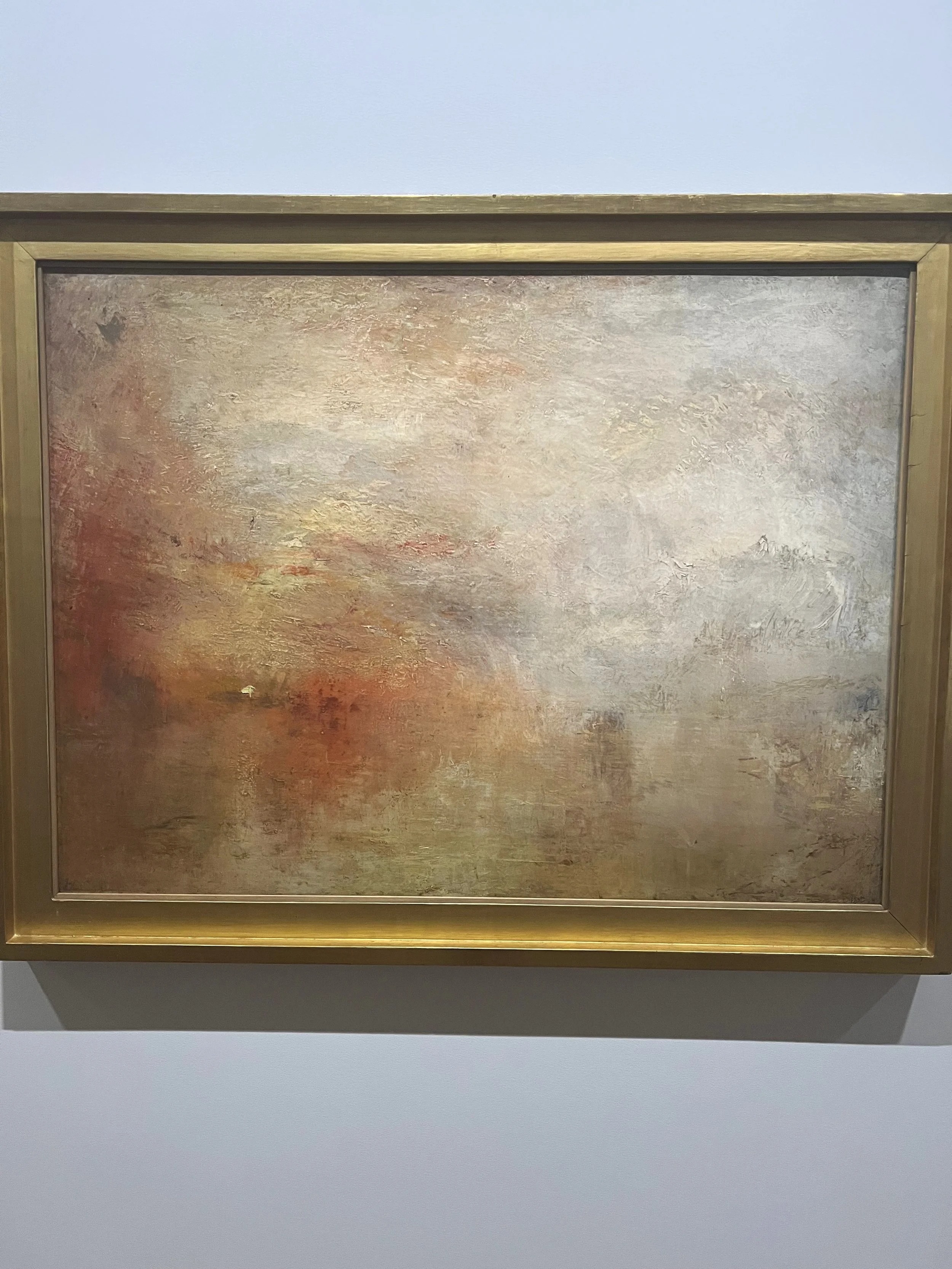
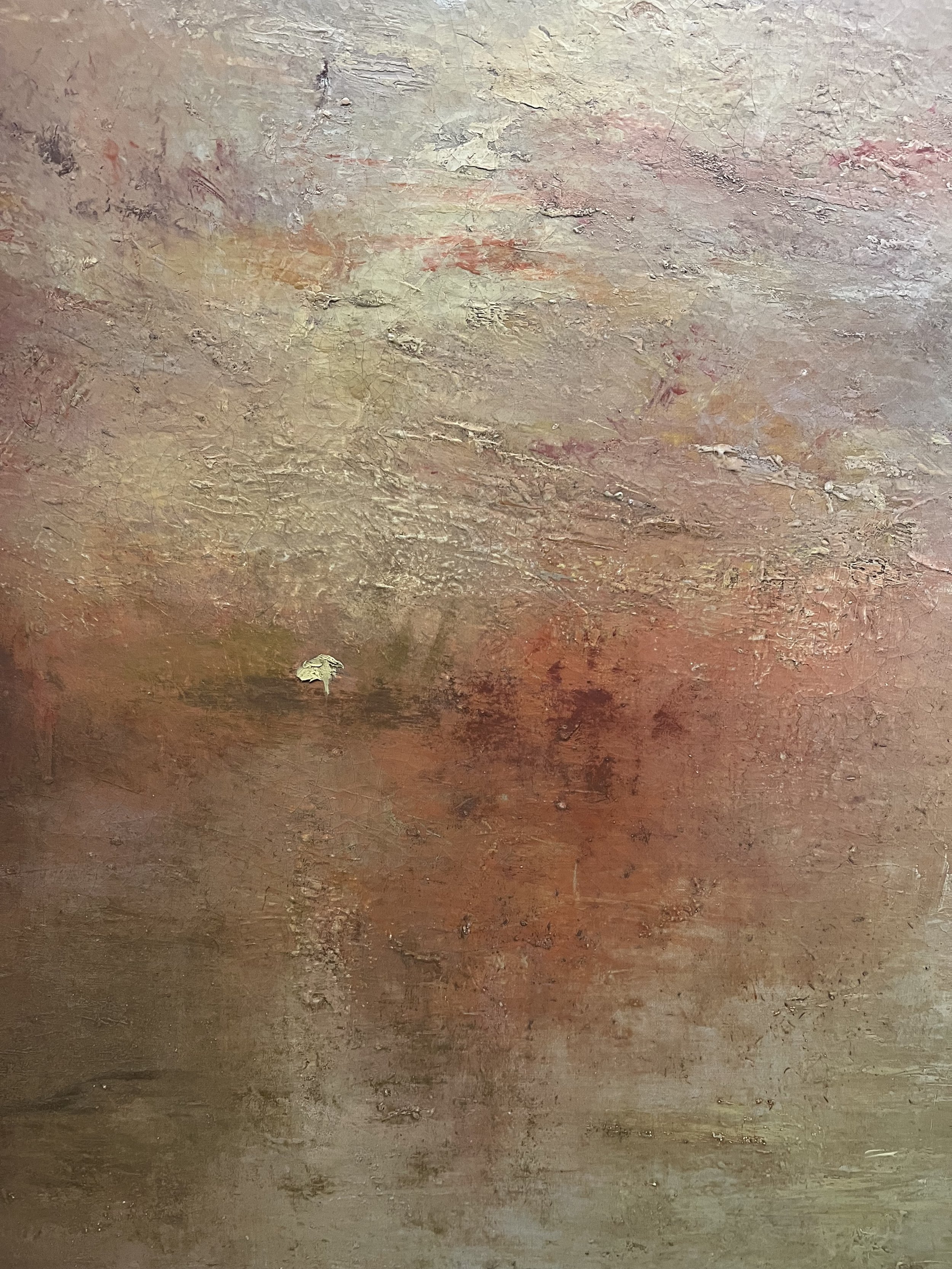
Sun Setting over a Lake

I was struck by the diversity of brush strokes and how Turner could make it seem a larger painting than it was in fact. The impact due to the build up of colours and glazes and the small figures seemed to make the painting ‘grow’ beyond its edges.

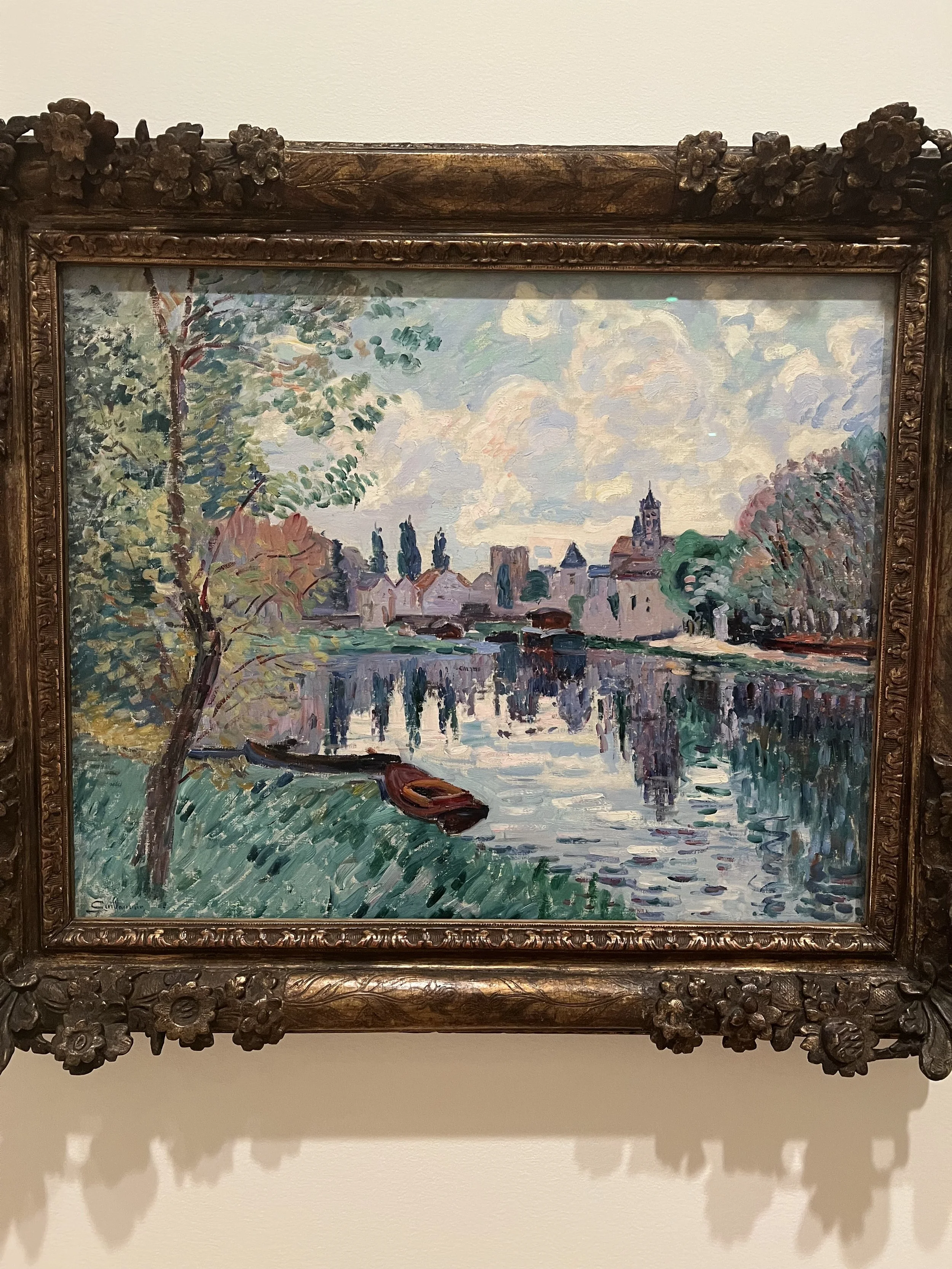
other standout pieces for me were the early impressionists like Guillaumin who influenced Cezanne among others.

Armand Guillaumin (1841-1927) France Moret-sur-Loing 1902

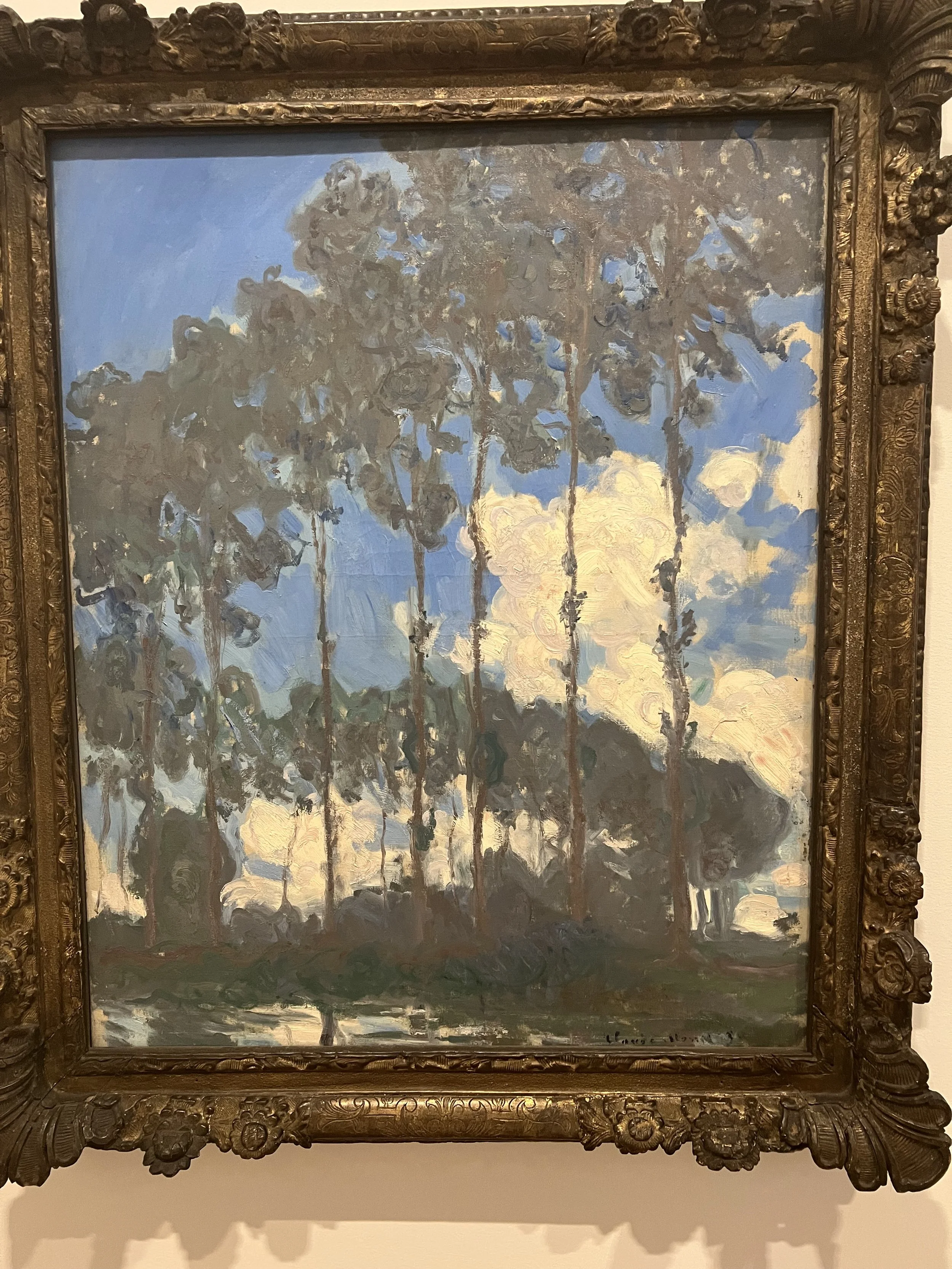
and then of course the Monet brush work is something for me to study closely - its both gestural and considered, he worked at speed en plein air in this painting, before the trees were cut down.

Claude Monet (1840-1926)

France

Poplars on the Epte 1891

Post 7 - Drawing Inspiration from Landscape

Visiting the Landscape

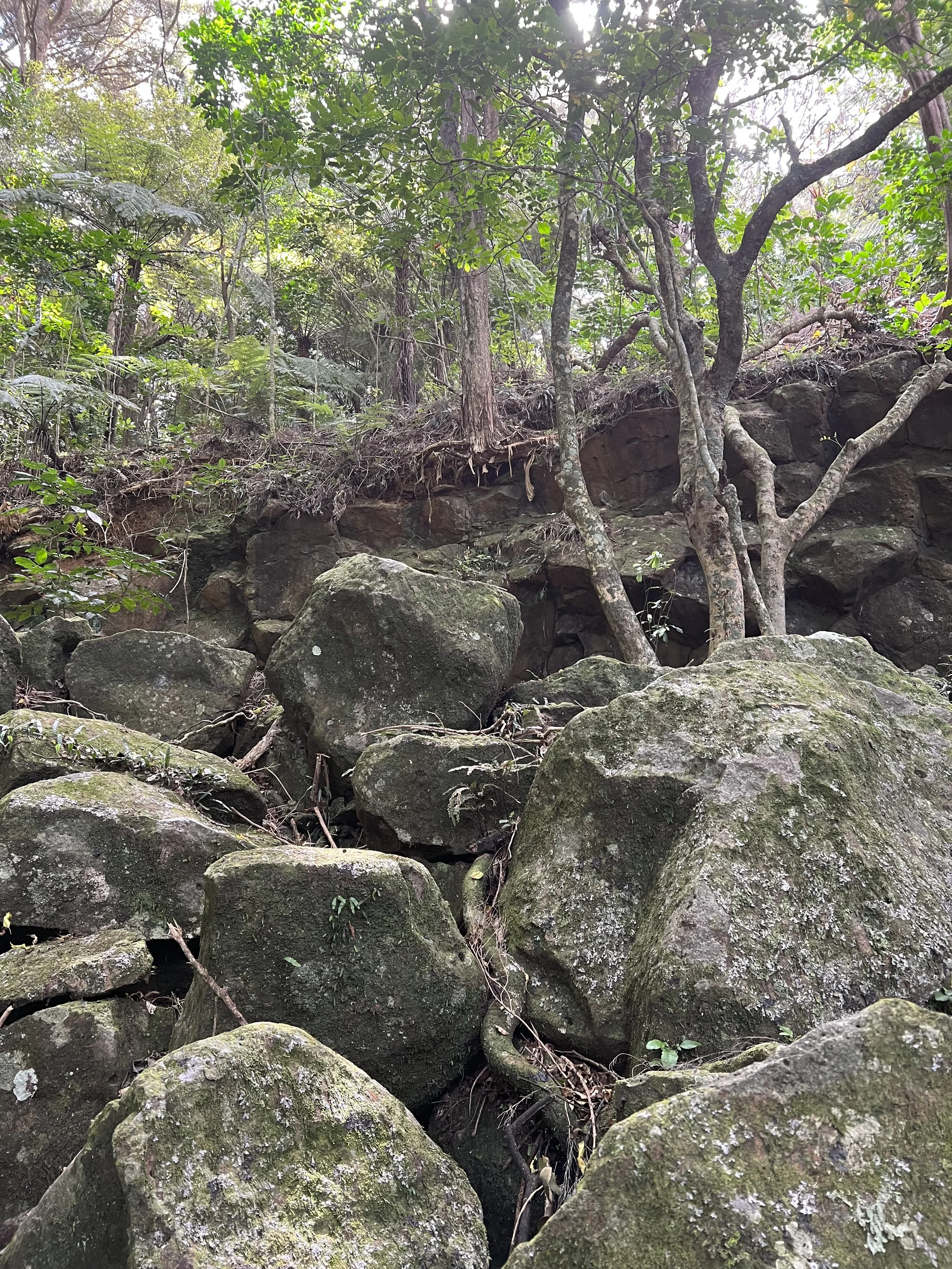
trip to the Far north of NZ - collecting images

Kaeo and Whangaroa Bay

keri keri walk to waterfall

Thinking about previous work and where to take things from here

Born never asked

oil on canvas

950 mm x 80mm

2021 Sally Barron

I have been looking at contemporary artists who are working with similar paint language and subject matter as me.

John Maclean

Landscape

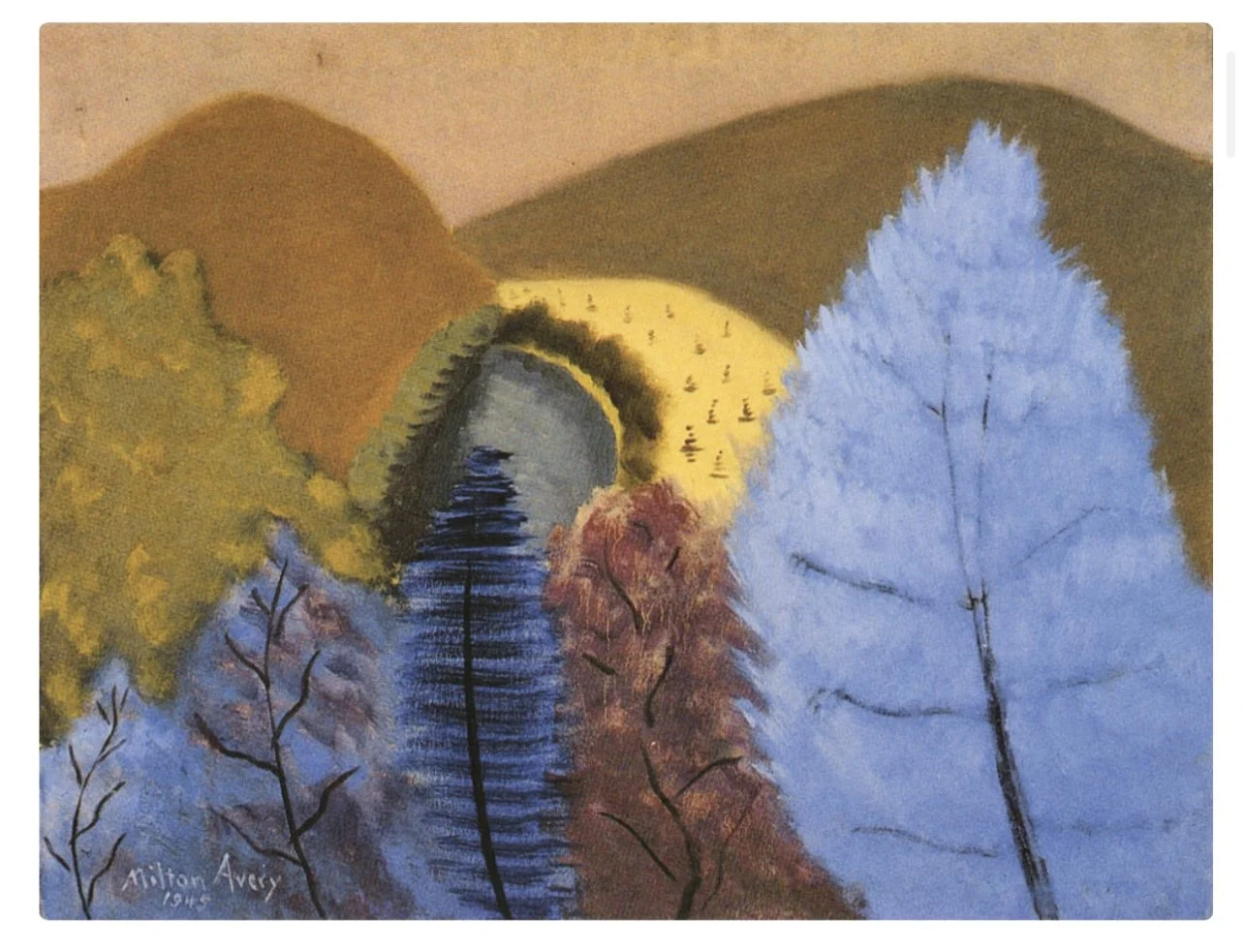
As well as Milton Avery who shaped blocks of coloured areas to define his simplified landscapes to great effect.

Milton Avery (1893-1965)

Blue Trees 1945

Oil on canvas 28 x 36 in

Sally Baron oil on paper

100 years

Oil sketches on Paper

100 years

Post 6 - Shadows and Waves

Thinking about Shadows and waves

For Plato, shadows were the symbol of our limitations. (see echoes of this in my previous post Sydney March 15 2023), in the work of Daniel Boyd, where his cave paintings recall The Allegory of the Cave, or Plato's Cave, presented by the Greek philosopher Plato in his work Republic (514a–520a, Book VII) to compare "the effect of education and the lack of it on our nature”. 1

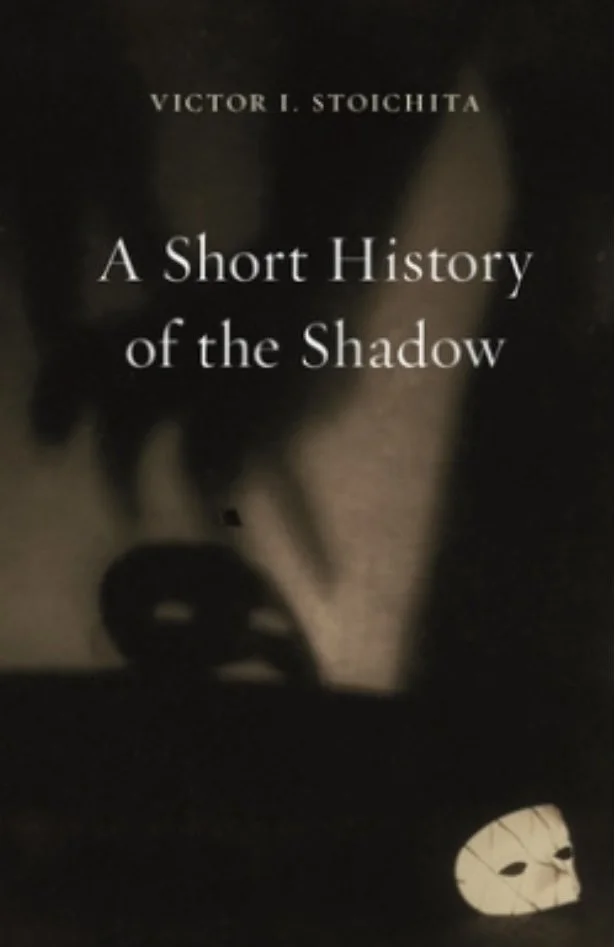
In ‘A Short History of the Shadow ‘ Victor Stoichita describes the history of one of the most difficult technical and symbolic challenges faced by Western artists: the depiction and meaning of shadows. Stoichita’s compelling account draws on texts by Renaissance artist-authors such as Vasari and Cennini, folk and fairy tales, and classical myths; works by van Eyck, Poussin, Malevich, De Chirico, and Picasso, among other masters; as well as German Expressionist cinema, photography, and child psychology. (fig 1)

Shadows can be a source of fear and a symbol of ignorance. In Western art they are hugely important. In his book Shadows: The Depiction of Cast Shadows in Western Art , art historian E.H. Gombrich discusses the way shadows were represented—or ignored—by artists from the Renaissance to the 17th century and then describes how Romantic, Impressionist, and Surrealist artists exploited the device of the cast shadow to enhance the illusion of realism or drama in their representations.2

I would like to explore the effects of shadows in my paintings, I feel I have used reflection especially in water a few times and think about clouds casting shadows on the land but would like to be more specific regarding my intentions at the outset of a painting.

Short History of the Shadow

fig 1

Museum of Contemporary Art - Sydney

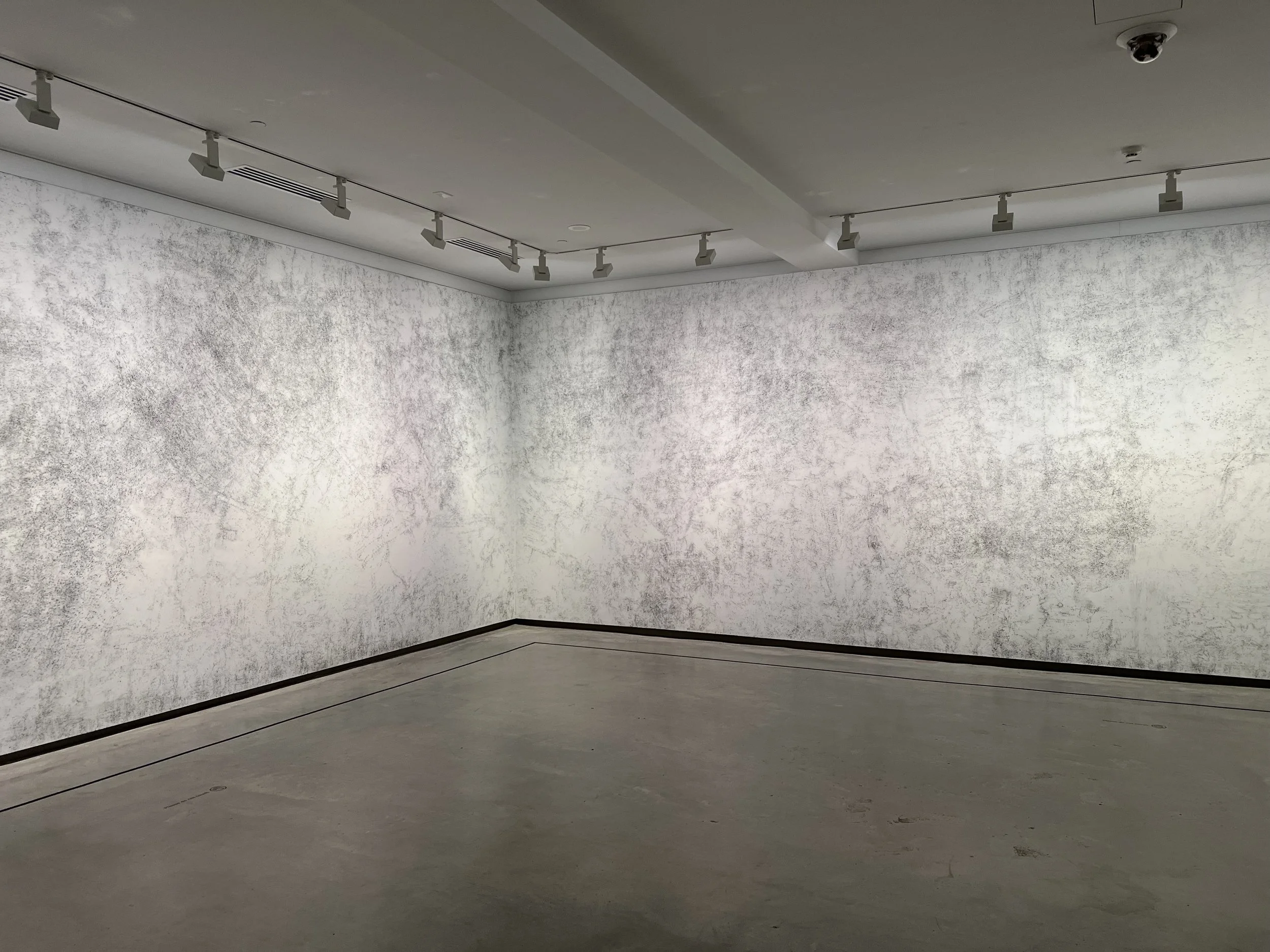
I was absorbed by the work of Tom Nicholson. fig 2

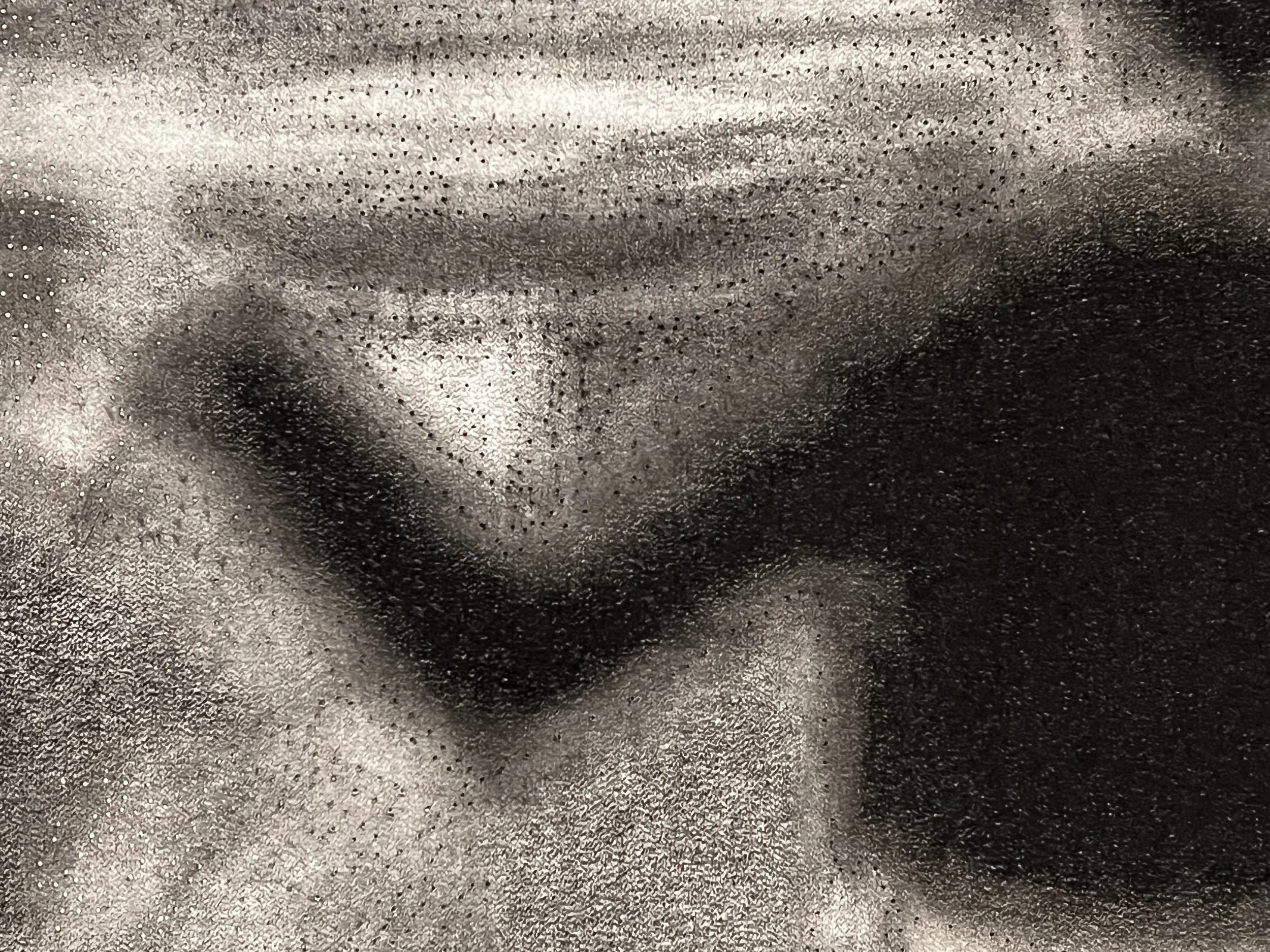
Like Mike Parr’s work in a previous post, it had the ability to envelope the viewer with scale and also draw you in to examine the marks and process more closely. I felt complicit in the action. The granite dust left by his pouncing techniques, left the impression of the memory of a firing squad leaving marks on the wall, echoing the Manet masterpiece Execution of Maximilian Nicholson.

Tom Nicholson (1973-) lives and works in Melbourne

Cartoons for Joseph Selleny 2014

Charcoal on paper, Charcoal on wall, offset printed book

Museum of Contemporary Art

Cartoons for Joseph Selleny 2014 is a work in 3 parts comprising a suite of large scale charcoal drawings, a vast wall drawing and a take away artists book.

The work pivots around the story of the SMS Novara, an Austrian ship that docked in Warren (Sydney Cove) in 1858 and departed with hundreds of objects made by Aboriginal people destined for European collections. In addition, the Novaras official artist Joseph Selling produced numerous drawings of the colony. local flora and fauna, as well as ethnographic portraits of the Aboriginal people. Nicholson’s work reflects on what is absent from Selleny’s visual account: the violence of colonialisation, which began unfolding from Warrane in 1788.

This violence is shadowed within Nicohlson’s charcoal drawings, which relate to the Nova’s subsequent journey to Mexico carrying its patron Archduke Maximilian to his new role as the country’s Emperor. The drawings are based on the history paintings by the French artist Edouard Manet that famously depict Maximilians execution. fig 3

Nicholson devised them as templates or ‘cartoons’ for the wall drawing. The drawings are perforated along their outlines them ‘pounced’, where the charcoal dust wrapped in cheesecloth is beaten against the cartoon’s surface to create dotted outlines on the wall behind": an historical technique to transfer forms worked out through drawing onto a wall where a finished painting will be made.3

Nicholson’s process of making the wall drawing instead gradually dissolves the outlines of the ‘cartoons’ through a repeated pouncing. The wall drawing becomes a field that implies a range of associations, like a provisional map of the world or an inverted image of the night sky with black points on a white ground. Nicholson describes the result as ‘a kind of weather’: a space in which to grapple imaginatively with the complex histories that connect Warren and the MCA to other parts of the world, and which cannot be contained within the limits of a picture.

Tom Nicholson

fig 3

Take away ideas

  • linking histories, for example Selleny’s work connects the Novara’s ship stories with Manet’s work and present exploration of the impacts of colonialism in Australia’s past and present.

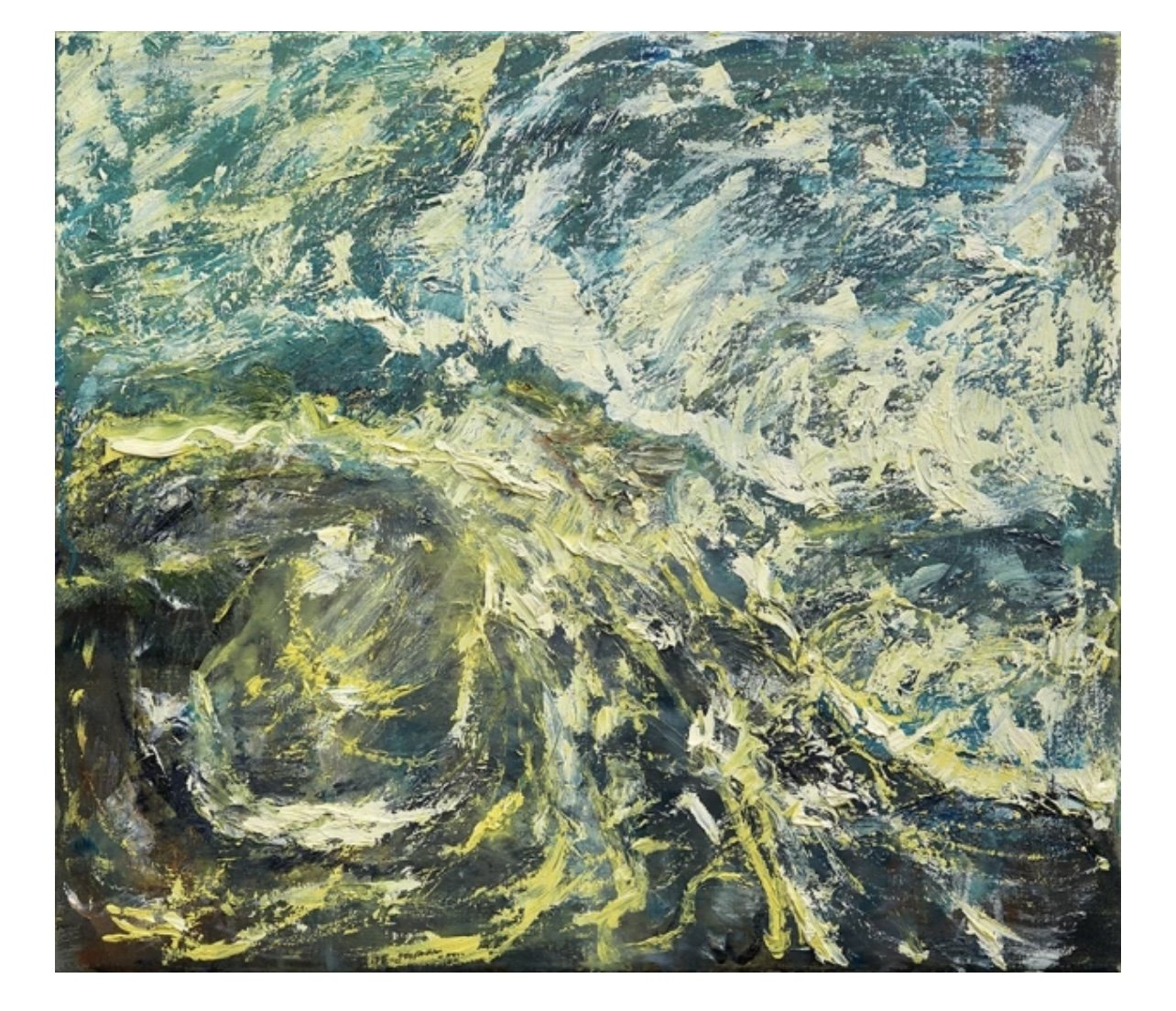
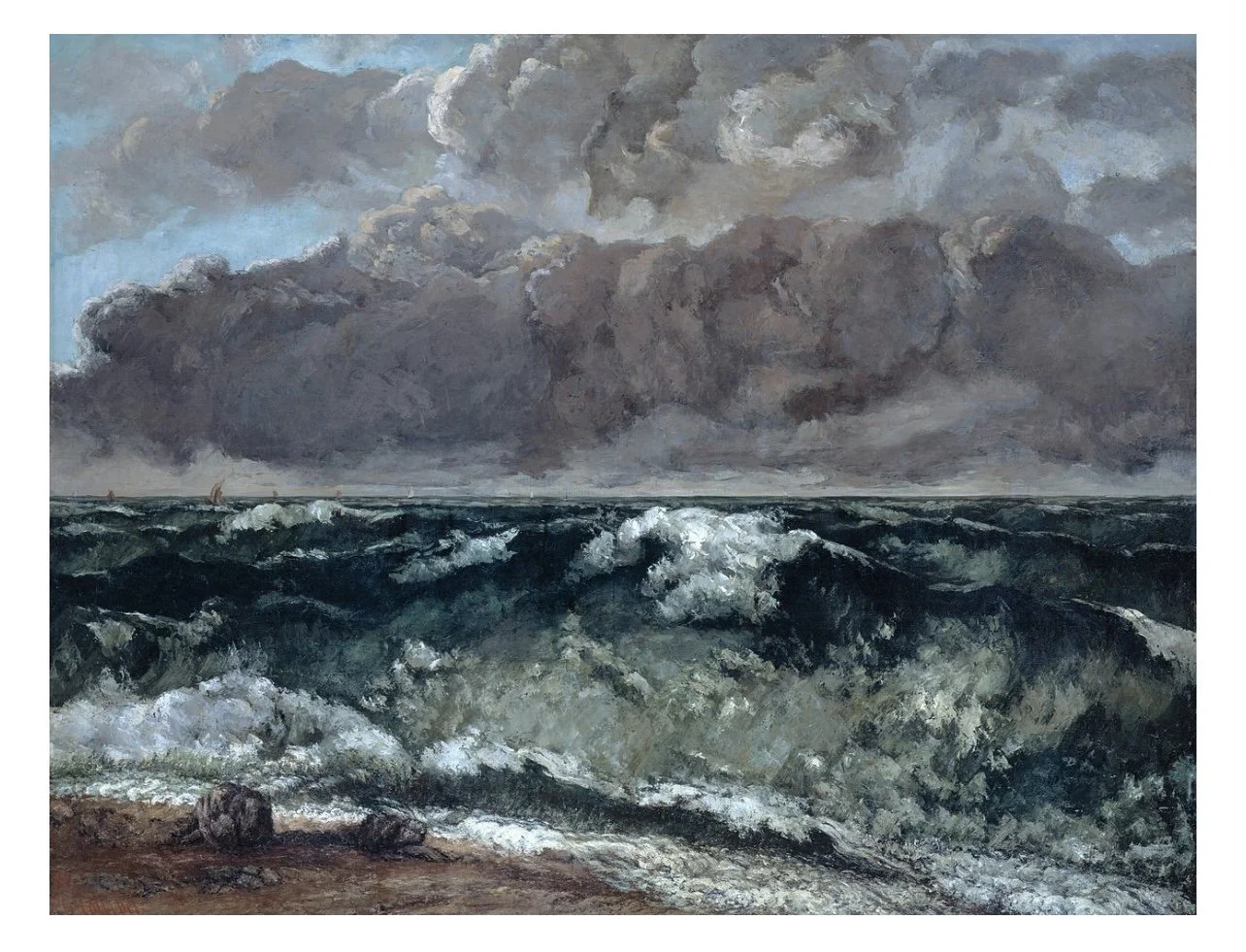
  • Celia Paul and Courbet, painters who create a solid form of non solid substance eg the sea. fig 4&5

fig 4

Celia Paul

Retreating Wave, 2015

Oil on Canvas 55.9 x 63.5 cm

Gustave Courbet, 1819 - 1877

The Wave 1869

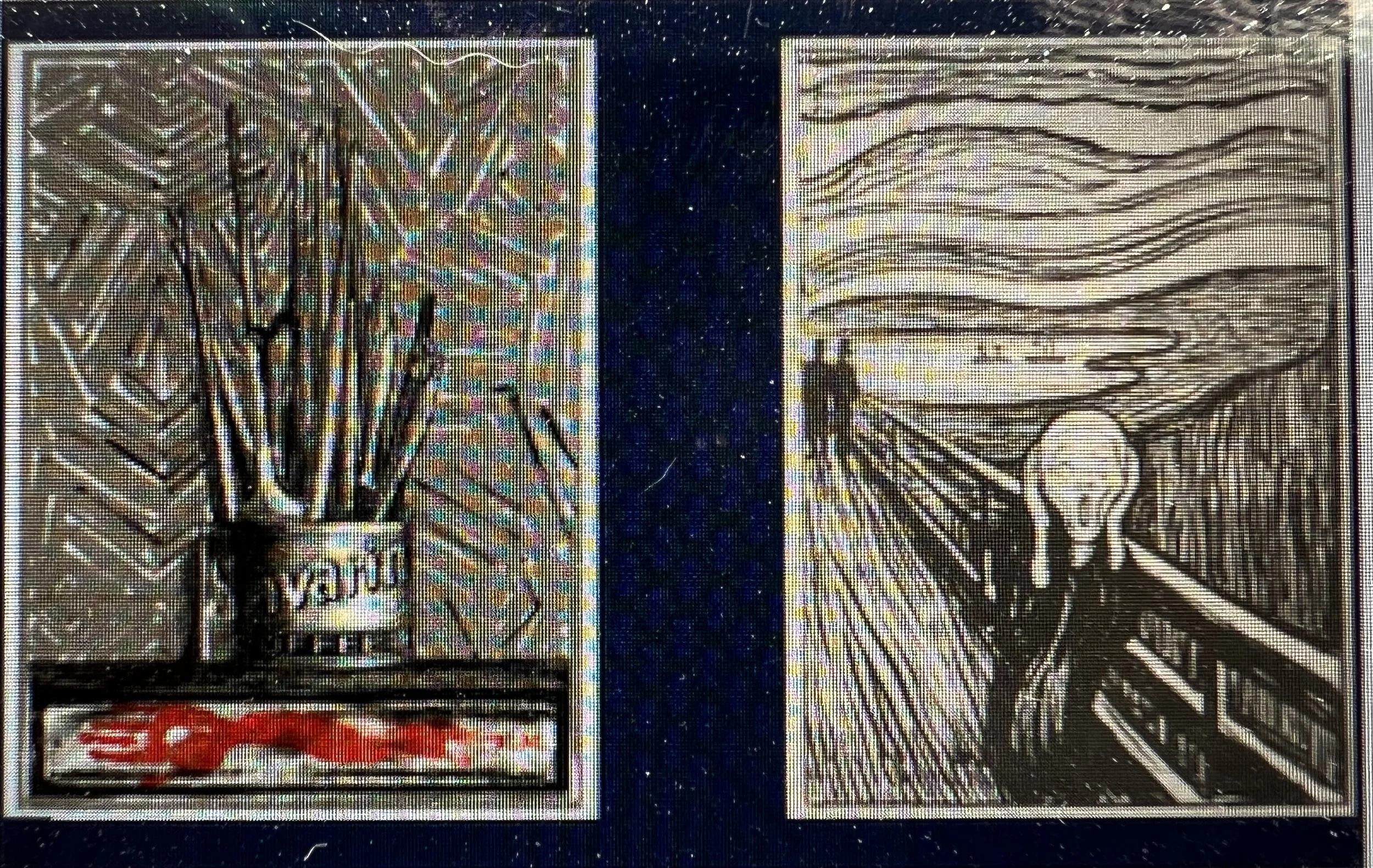
  • repetition of marks - thinking about the work of Edvard Munch, and how he has influenced abstract art, for example - Jasper Johns. In the show Jasper Johns and Edvard Munch: Love, Loss and the Cycle of Life, Virginia Museum of Fine Arts, Kathleen Chapman describes how Johns began to engage closely with Munch’s figurative work, “the abstract motif of crosshatching . . . a mark about making marks,” until it became the central feature of his art (fig 4–5)

  • colour palettes - Tracy Emin talk on YouTube about Capri landscape being the basis of her painting palette - pinks blues and grey. (For me the palette of Sussex and New Zealand seems to be predominantly yellow Green and red.)

  • Reading ‘The Waves’ by Virginia Woolf - childhood events and experiences are narrated by many individuals, each sees the world through their own perspective, time and place are revealed to us through layers. Whilst the writing appears to be a stream of consciousness, it is in fact carefully constructed to transport us through each persons sensations focusing on sensory experiences, sight, smell, touch, sound etc. A description of memories, of the dichotomy of appearance and reality, self and self-determination. Woolf closely links experiences of nature with the personalities and realisations of the self each protagonist relates. Trees and leaves feature in every page standing as internalized images representing each character's sense of self. Trees for Woolf are always primeval and living, just as she imagines the human self, they feature along with countless descriptions of light and the foreshadowing of events. Leaves also are vital to this description of the interconnected nature of ourselves and the outer world. As Mayuko Nakazawa describes “For Woolf and the characters, leaves are figured as components of the self, representing the countless "atoms" or impressions accumulated in memory and consciousness.” 4

Jasper Johns and Edvard Munch

4 &5

Footnotes

1 https://en.wikipedia.org/wiki/Allegory_of_the_cave#cite_ref-The_Republic_2-4

2 https://italianacademy.columbia.edu/sites/default/files/content/casati_10-10.pdf

3 https://www.mca.com.au/artists-works/artists/tom-nicholson/

4 Author: Mayuko Nakazawa Date: Spring 2012 (Issue 81) Publisher: Southern Connecticut State University

https://go.gale.com/ps/i.do?p=AONE&u=googlescholar&id=GALE%7CA316664486&v=2.1&it=r&sid=googleScholar&asid=2f655afc

5 December 8, 2017 John B. Ravenal, ed.Jasper Johns and Edvard Munch: Inspiration and Transformation Exh. cat. New Haven: Yale University Press, 2016. Virginia Museum of Fine Arts, November 12, 2015-February 20, 2016 Kathleen Chapman

CrossRef DOI: 10.3202/caa.reviews.2017.188